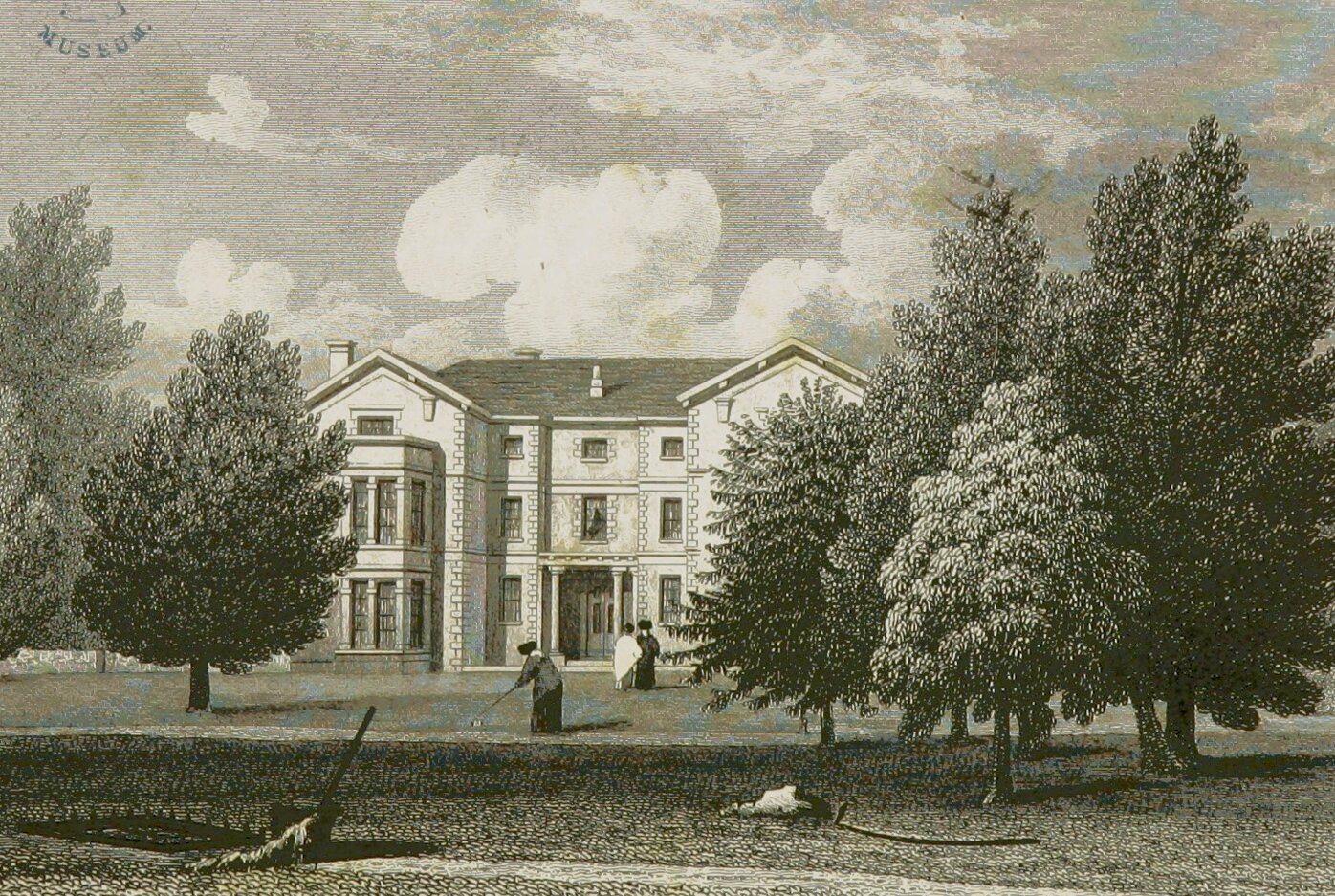
Introduction
Finally free, the Crafts set out to build a life and family in their new country. William and Ellen Craft worked tirelessly for abolitionism as well as other causes, while providing for, raising, and educating their growing family – including their second son, William Ivens Craft. Though celebrities in the abolitionist network, William and Ellen Craft nonetheless struggled financially to meet the demands of their new life in England, among the British upper-class.
A Growing Family
The England that the Crafts fled to woefully lacked Black and African-descended communities. Like the Crafts, most Black men and women who traveled to England in the mid-nineteenth century did so as self-emancipated people – their numbers increasing after passage of the Fugitive Slave Law in 1850 (Blackett 1983, 5). Thus it was that the Crafts relied on white abolitionist networks in their early years in England.

William Wells Brown, “'Arrival of William and Ellen Craft in England'” The Liberator 21, no. 4 (24 January 1851): 15, Boston Public Library. No known copyright restrictions. No known restrictions on use. The Liberator, abolitionist William Lloyd Garrison’s Boston-based newspaper, announced the arrival of William and Ellen Craft in England on 24 January 1851. For abolitionists, activists, and their allies, that the Crafts had to travel all the way to England in order to be free epitomized how the so-called Southern Slave Power held a truly national grip on even the “free” regions of the United States.
After some time on the abolitionist lecture circuit in England, which the couple “spent virtually on the road, with speaking engagements the length and breadth of the country,” says Craft descendant and family historian Chris Clark, the Crafts settled in Ockham (Clark 2022c). There, William and Ellen worked and learned at a school (Craft 1860, 109). It was at Ockham that their first child was born into true freedom. They welcomed Charles Estlin Phillips Craft in October of 1852 (Green 2018, 19).
With a small but growing family, the Crafts decided to strike out on their own and open a boarding house in London. The family ended up at Beavor Cottage in Hammersmith, West London, where William Ivens Craft, Ellen and William’s second son, was born on 16 October 1855. William Ivens’ middle name, sometimes spelled “Ivins” or even “Ivans,” paid homage to Barclay Ivins, a Dutch Quaker, who aided the Crafts in their escape in 1849 (Green 2018, 19; Berry 2006, 233; Copeland 2021). The Ivins family taught William and Ellen how to write their names. As the couple would later remember, they would never again be “under a roof where we were made to feel more at home” (Craft 1860, 86; Woo 2023, 135-137).
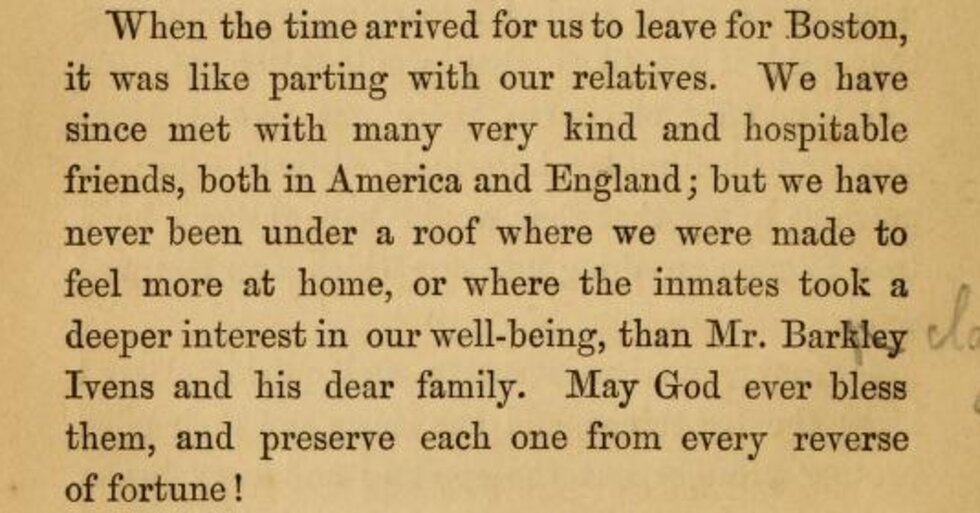
William Craft, “Crafts Thank Ivins Family,” in Running a Thousand Miles for Freedom; or, the Escape of William and Ellen Craft from Slavery, by William Craft (London: William Tweedie, 1860), 86, Internet Archive. No known copyright or restrictions. In their own words, William and Ellen described the meaningful relationship they developed with the Ivins family during their long journey to freedom. The Ivins daughters offered to teach Ellen and William how to read and write while the couple stayed with the Ivins on their Pennsylvania farm – the Crafts were able to write their names before they left. The couple later reflected that the hospitality the Ivins family showed them was in fact “the first act of great and disinterested kindness we had ever received from a white person.” The Crafts cherished and valued the cursory yet meaningful education they received from the Ivins, as reflected by their decision to bestow one of their sons with that family’s name.
It was so no small thing for William and Ellen Craft to name their children. Seeking freedom for the purpose of ensuring free lives for their children, the ability to confer on a name of their choosing represented that they, and their children, could no longer be claimed as property – in law or in name. That the Crafts gave William Ivens Craft the name of white abolitionists signals the great extent to which they valued the networks that had helped bolster their journey to freedom.
By the close of 1855, the family was established at 12 Cambridge Road in Hammersmith, London, although the boarding house did not seem to pull as much income as they had hoped. William was busy in multiple business ventures hoping to make ends meet and achieve economic independence for his now-famous abolitionist and activist family (Sterling 1988, 43-44).
The Child of Activists
William Ivens grew up in the house that William and Ellen had purchased at 12 Cambridge Road, while his busy parents agitated tirelessly for the abolition of American slavery. Their family had grown significantly, as they welcomed a third son, Stephen Brougham Dennoce, and the family’s first daughter, Alice Isabella Ellen, by the early 1860s (Green 2018, 19; Craft 1860, 82-85).
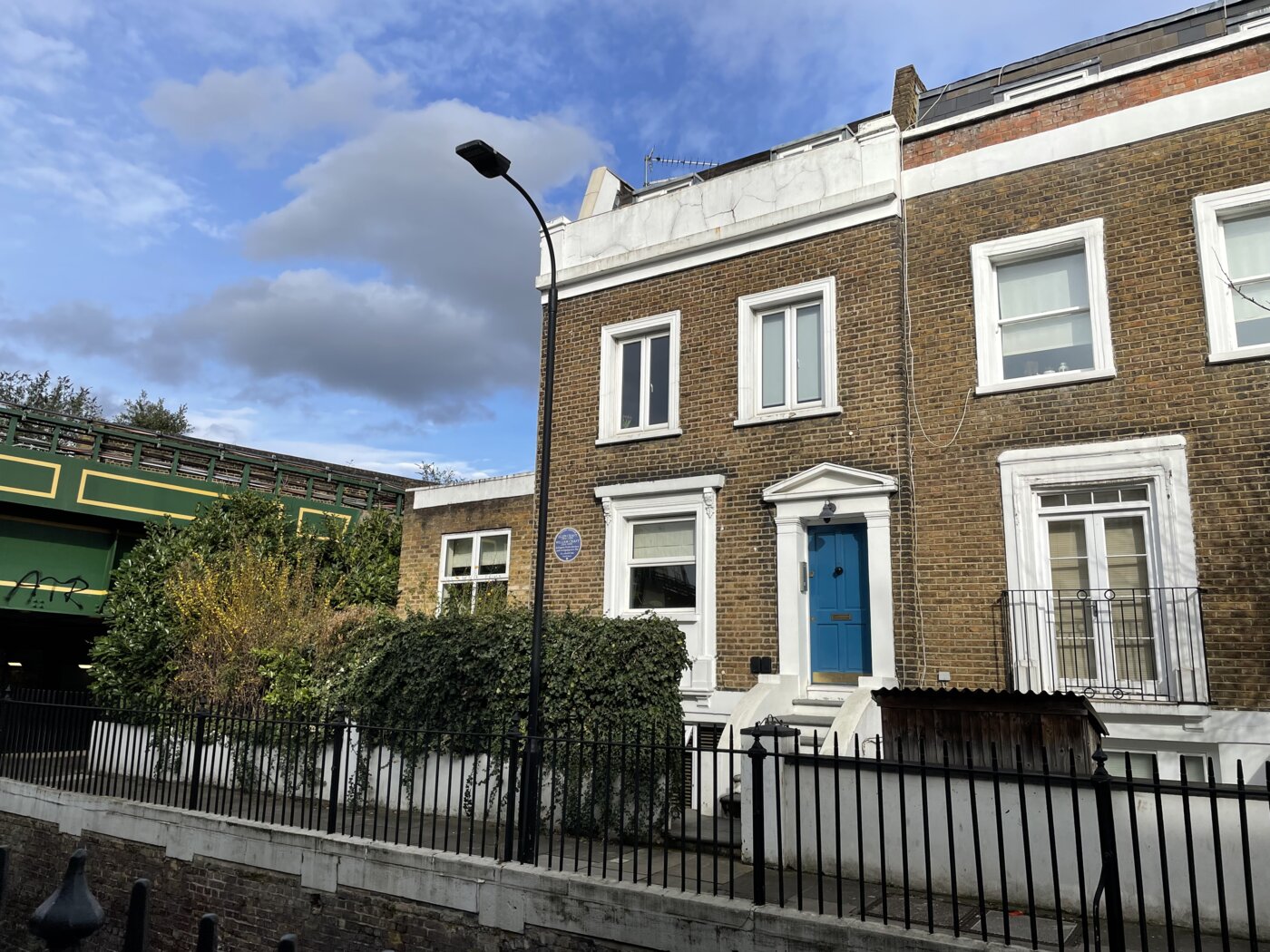
Hope McCaffrey, “Craft Home on Cambridge Grove” (Photograph, London, 16 March 2023), Hope McCaffrey Private Collection. Creative Commons Attribution 4.0 International. The Craft house at 12 Cambridge Road still stands today (2024). The home represented so much more than just a house for William and Ellen and their growing family. It represented their freedom, their first experience truly living off of the fruits of their own work, and a place where their children could play, learn, and grow as free people.
Alice Isabella Ellen Craft, who went by Ellen, was born Maria Ellen, ostensibly named after Ellen’s mother, but baptized with the longer name. She later listed her name as Ellen A. Craft. As William Ivens’ great-grandson, Chris Clark, notes, the mutable nature of Craft family given names “presents a can of worms for today’s researchers” (Clark 2022b). Historian Garry Walton has gathered the many different appellations associated with Ellen A. Craft, later Crum, pointing to the complexity and often messiness of accounting for people in the past (Walton 2022).
Connected to the transatlantic anti-slavery circuit, the Crafts lectured throughout England. Occasionally, they brought their children along. In a speech given at an anti-slavery meeting at Spafields Chapel in October 1859, William Craft described that he and Ellen had:
left America, and came to this free and glorious country, where no tyrant, let his power be ever so absolute at home, dare lay violent hands upon them, or upon the child then before the audience, or the two other boys with which God had blessed himself and his wife, and reduced them legally to the level of the beasts that perish (London Emancipation Committee 1859, 13-15).
The Crafts exposed their children from an early age to their activism and to the idea that freedom for their progeny is what led them to – at great risk – self-emancipate. The following year, in 1860, William and Ellen Craft published a narrative of their escape, in which they recognized the benevolence they had received from their British supporters (McCaskill 2015, 66-67).
Yet even while deeply embedded in this transatlantic and interracial abolitionist movement, the Crafts made note of, in more private venues, the anti-Blackness that pervaded British society (McCaskill 2015, 68-70). Friend of the Crafts Mary Estlin confided in a fellow abolitionist that “Ellen Craft says nothing has astonished & pained her here so much as the amount of proslavery feeling among the English” as well as “the bigotry of the majority of professed Antislavery people” (Estlin 1851; Zackodnik 2004, 47).
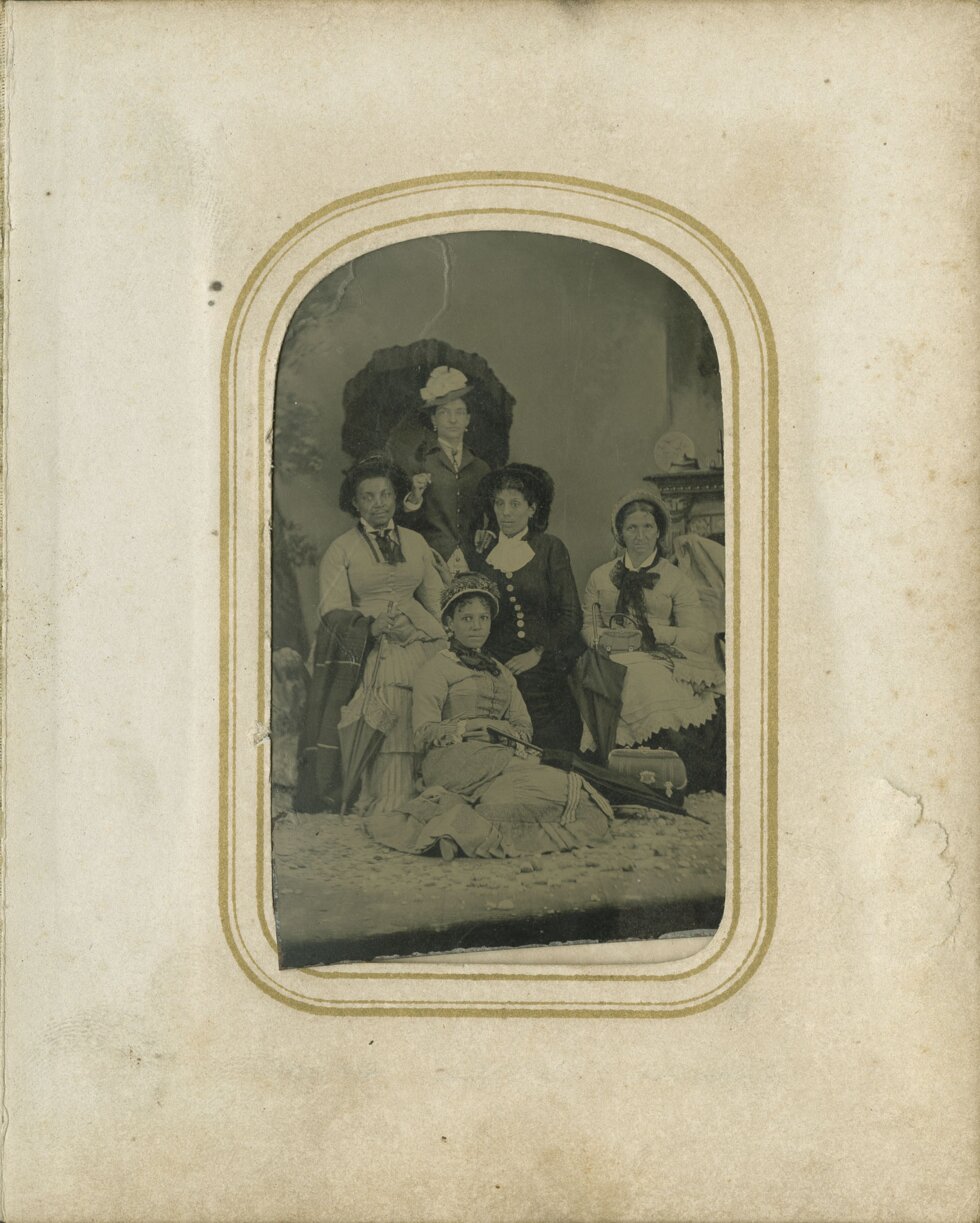
Anonymous, “Ellen Craft with Group of Women,” (Photograph, [unknown]), Avery Research Center, Charleston, United States. Courtesy of Avery Research Center for African American History and Culture, College of Charleston Libraries. All rights reserved. This is one of 7 images published by this project, all of which exhibit the same material characteristics due to coming from a single album held by the Avery Research Center. Ellen Craft, far right, sits for a photograph with a group of unidentified women. Although best known as a self-emancipated free person and abolitionist, Ellen Craft was also active in a number of feminist and women’s rights causes throughout her life.
Still, Ellen Craft worked hard. She spent much of the 1860s raising her family, maintaining their household, and possibly even taking on boarders at 12 Cambridge Road (Green 2018, 25). Ellen oversaw her children’s education and managed at least one household servant, doing so largely without the aid of William, who traveled back and forth to Dahomey (now Southern Benin) multiple times throughout the decade (Sterling 1988, 46). Ellen also participated in the women’s branch of the British and Foreign Freedmen’s Aid Society, and she played an integral role in the Ladies’ London Emancipation Society, which sought to liberate individuals still held in bondage. She later became involved with the Women’s Suffrage Association (Hughes and Farrell 1997).
An English Education
Education and activism grounded the lives of the Craft children. While the War of Rebellion raged in the United States, William Ivens, along with at least one of his brothers, enrolled in school in Brixton. William and his younger brother, Brougham, attended the Brixton Lodge College School in Atkinson Place. The school, run by Thomas Royle Quicke, had initially offered “preparation for the military and civil service examinations,” but by the time William Ivens attended, advertised “a sound Commercial and Classical Education” (Anonymous 1860b; Anonymous 1874a).
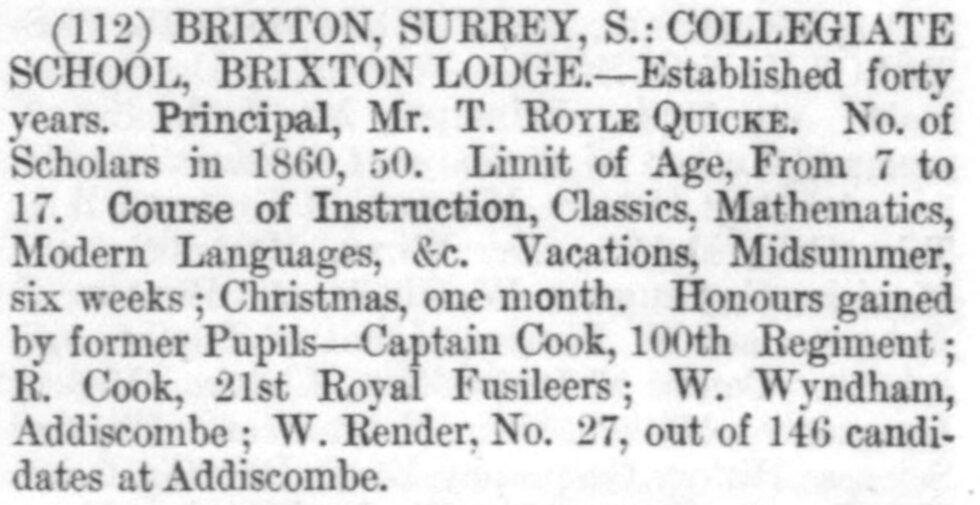
Anonymous, “Advertisement for Brixton Schools,” (Journal article, 13 October 1860), in The Literary Gazette 5, Internet Archive. No known restrictions on publication. In addition to listing what kinds of courses students could take, this ad also shamelessly boasted of its graduates’ accolades.
This advertisement reveals that the Craft boys studied classics, math, and various languages among other topics while attending the Brixton Lodge school. At this time in the US, the educational landscape for Black children was highly variable. Though Black activists recorded some important victories in places like Boston, and while some schools in the northern states enrolled racially integrated student populations, white legislators sought to keep many schools racially segregated. And many state and local governments frequently denied public funding to schools that served Black students. With such uncertainty, the Craft children likely had better educational opportunities in London than they would have had in the United States.
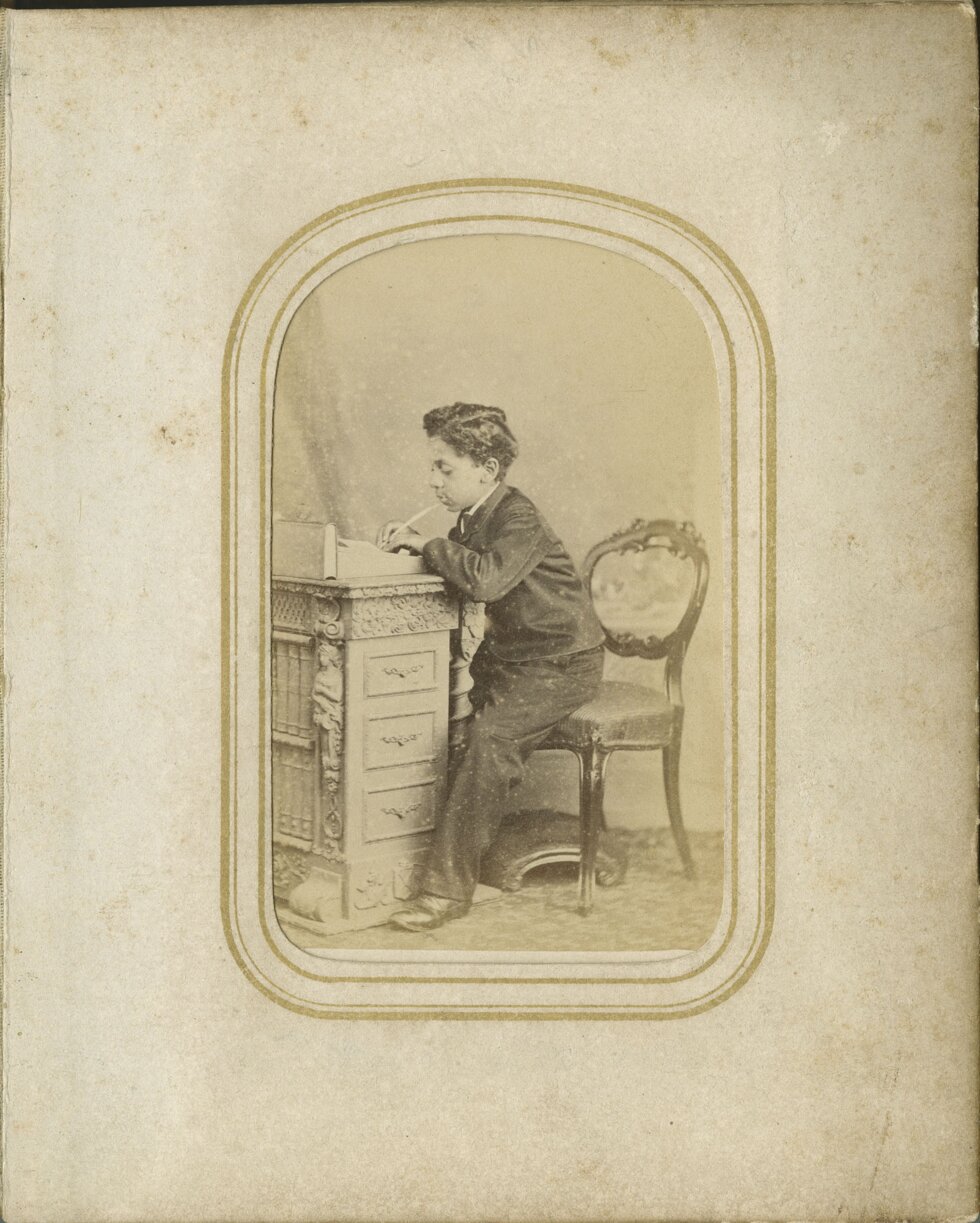
Anonymous, “A Young Scholar” (Photograph, [c.1850-1880]), AMN 1102, Avery Research Center, Charleston, United States. Courtesy of Avery Research Center for African American History and Culture, College of Charleston Libraries. All rights reserved. This is one of 7 images published by this project, all of which exhibit the same material characteristics due to coming from a single album held by the Avery Research Center. This photograph, tucked carefully in the Craft family album, is likely a portrait of one of the Craft children. There is debate among Craft descendants regarding who this might be: Alfred? William Ivens? Regardless of which child sat for the photograph, the image reflects that education was a priority for the Craft family.
Until the mid-nineteenth century, the village of Brixton stood as a bucolic settlement with a smattering of homes and educational institutions. When the railway connected Brixton to London in 1862, the town was transformed into a suburb (Anonymous 1862). With trains out their front door, these young Black children experienced freedom of movement, something their American counterparts also likely would not have known at this time.