Introduction
William Ivens Craft’s parents, William and Ellen Craft, were two of the most well-known self-emancipated abolitionists and activists in the transatlantic world due to their storied escape. Both born into slave status, William and Ellen resolved that no children of theirs would live an unfree life. The “fact that another man had the power to tear from our cradle the new-born babe and sell it in the shambles [...] haunted us” (Craft 1860, 1-2), they wrote. They would be forced to journey across the Atlantic in pursuit of such freedom.
Parents
Ellen and William Craft were both born in Georgia in the 1820s. Ellen Craft was the daughter of Maria Smith, an enslaved woman, and Major James Smith, the man that enslaved her and her mother. There are many unknowns that remain regarding Ellen’s mother and her family. Maria Smith did not leave any written record that we know of, and James Smith’s archives are silent on the nature of his relationship with Maria. Nonetheless, the fact remains that Major Smith – actively and everyday – enslaved Maria Smith, robbing her of any legal personhood and therefore any ability to even have the option to consent. So, while we can’t at this moment know the details of the relationship, historian Annette Gordon-Reed writes that what we can and do know is the power dynamic that existed. An enslaver’s power, notes Gordon-Reed, “was such that one could never be sure” of enslaved women’s “true desires” (2009, 315). An enslaved woman like Maria Smith “did not – because she could not – consent” (Gordon-Reed 2009, 315).
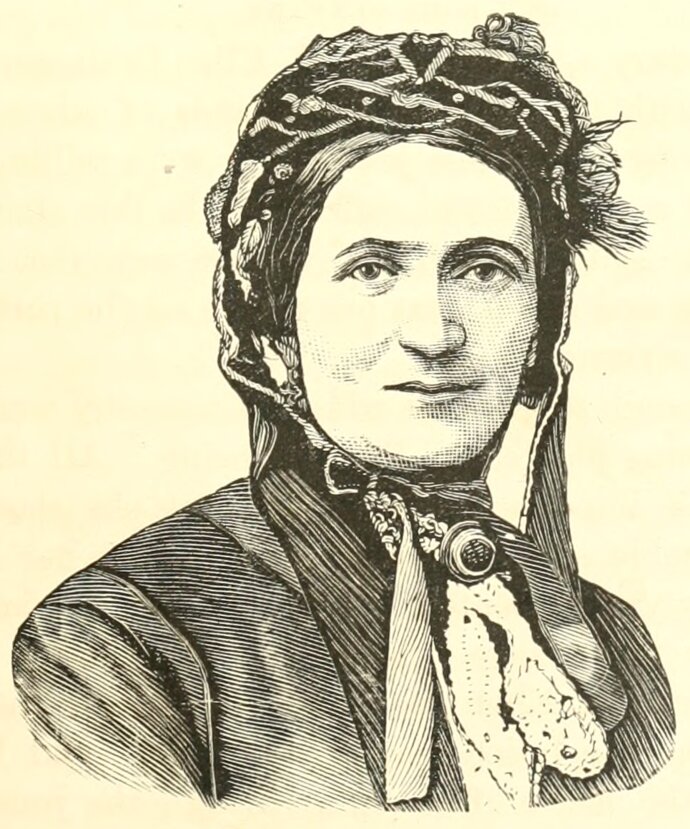
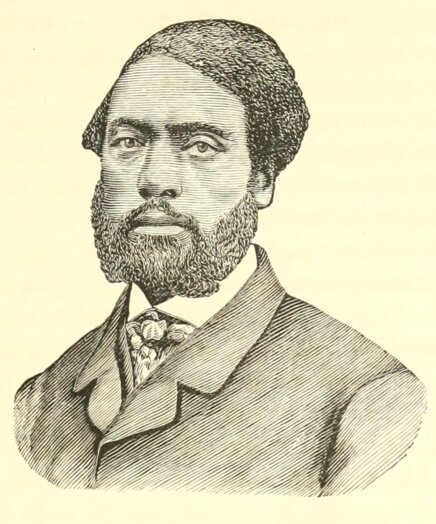
Anonymous, (Left) “Ellen Craft” and “William Craft” in The Underground Rail Road. A Record of Facts, Authentic Narratives, Letters, &c., Narrating the Hardships, Hairbreadth Escapes and Death Struggles of the Slaves in Their Efforts for Freedom, by William Still (Philadelphia: Porter & Coates, [1872]), 368, E450 .S85, Library of Congress. No known restrictions on publication. Sketches of Ellen (L) and William (R) Craft as they appeared in an 1872 volume about the Underground Railroad. The couple and their likenesses became a famous example of enslaved people’s ingenious methods for resisting and escaping slavery in the mid-nineteenth century.
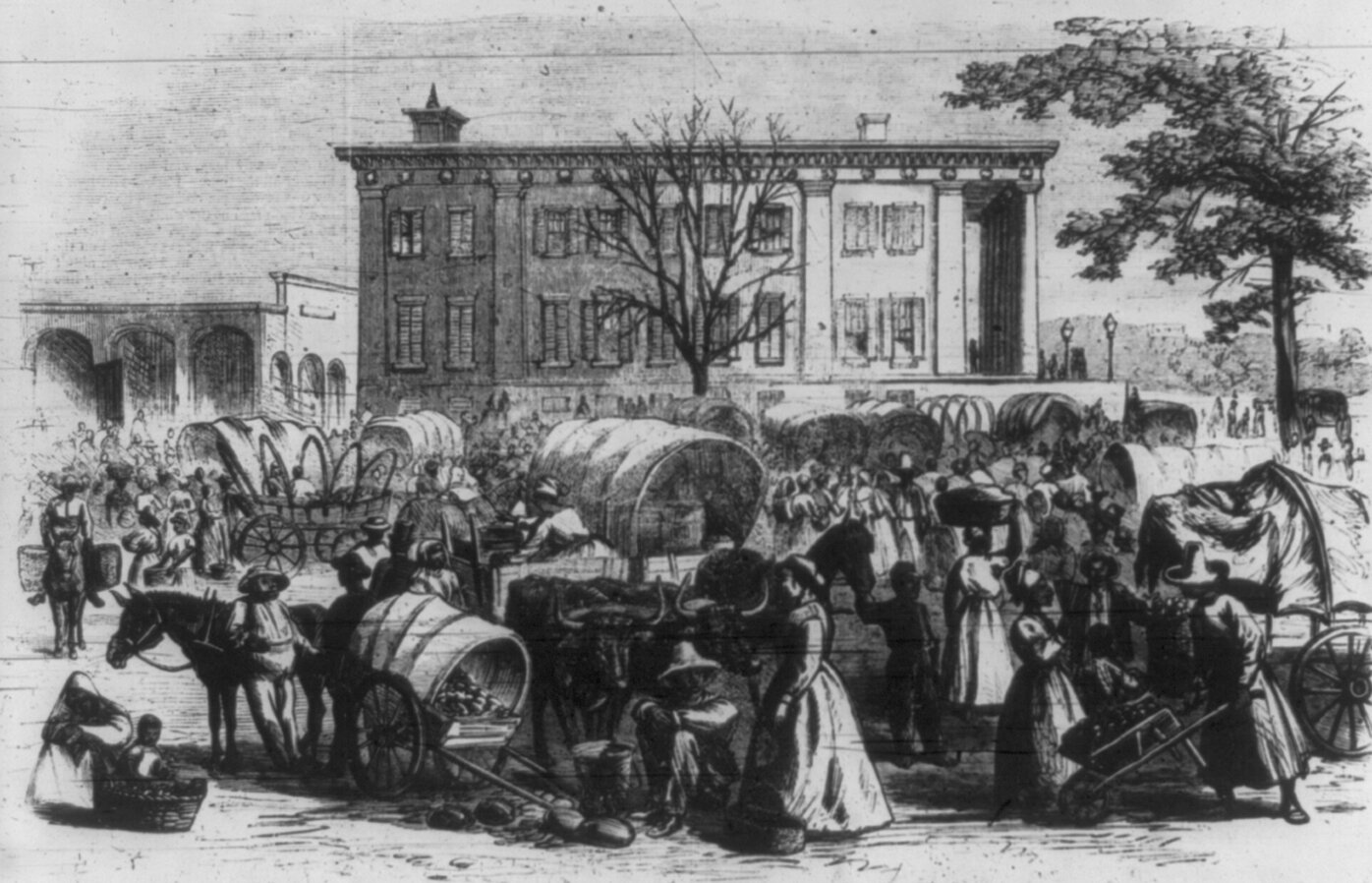
When Ellen was a young girl, she was one of many enslaved people that lived and worked on the Smith plantation. The Smith family enslaved 64 individuals in 1830, by 1840 that number reached nearly 80 (“1830 US census"; "1840 US census”). William Craft was the son of two enslaved parents (Sterling 1988, 5, 10). William and Ellen came of age as the domestic slave trade boomed in the Southern states, spread south and west by enslavers into land made recently available by the US government’s genocidal Indian removal policies. William witnessed his enslaver separate and sell each of his family members – father, mother, brother, and sister – all of whom were purchased by different enslavers to work America’s newly acquired land (Craft 1860, 9-10).
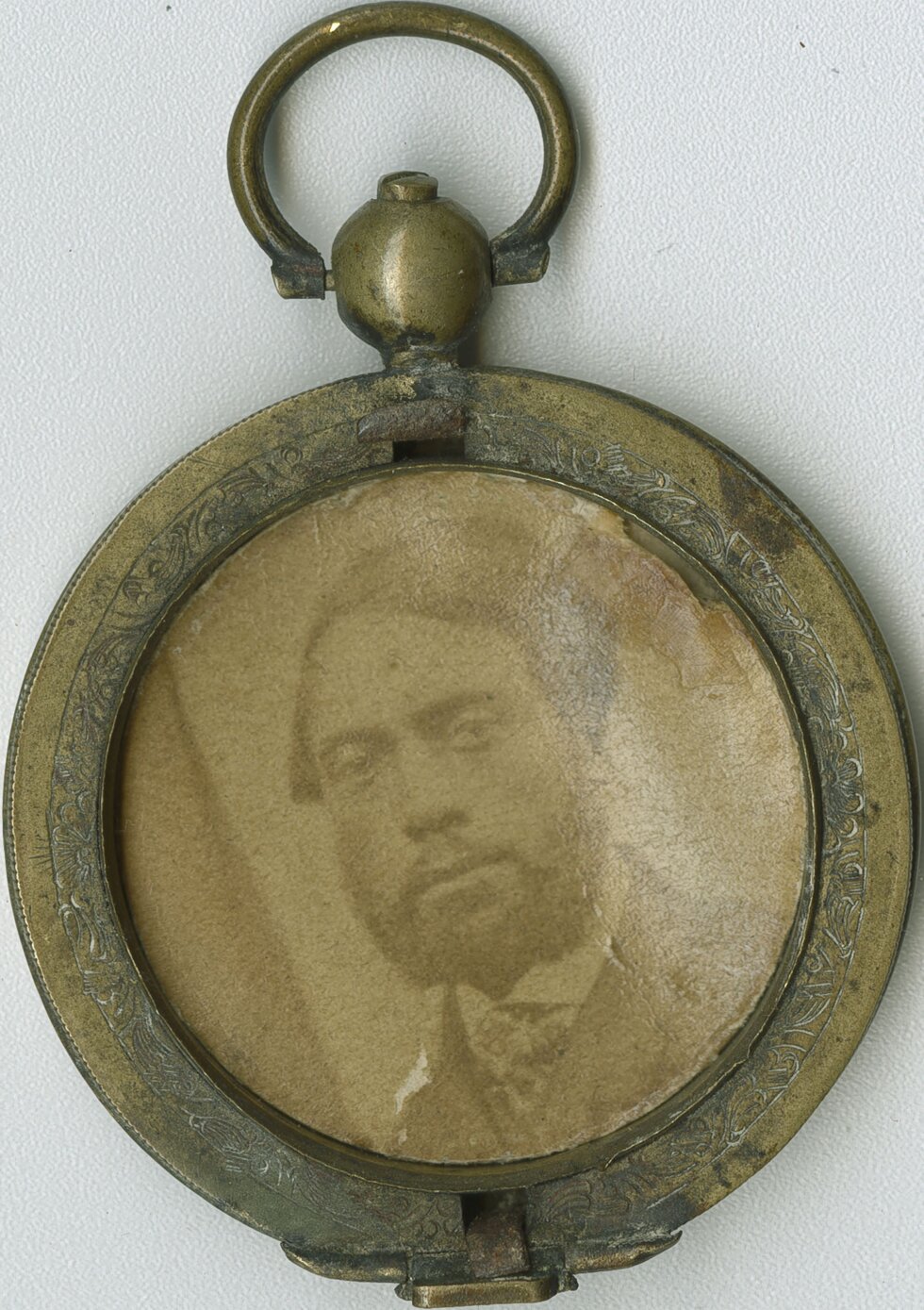
Anonymous, “William Craft in Locket” (Photograph, [c.1824-1900]), AMN 1102, Avery Research Center, Charleston, United States. Courtesy of Avery Research Center for African American History and Culture, College of Charleston Libraries. All rights reserved. This photograph, preciously preserved in a locket, is one of the only known photographs of William Craft, William Ivens’ father.
In 1837, Smith’s wife, Elizabeth Cleveland Smith, gifted eleven-year-old Ellen to her daughter, Eliza (Ellen’s half-sister by birth) as a wedding present, forcing Ellen to move to Macon. It was there in Macon, while enslaved by the Collins family, that Ellen met William Craft (Woo 2023, 15; Sterling 1988, 8).
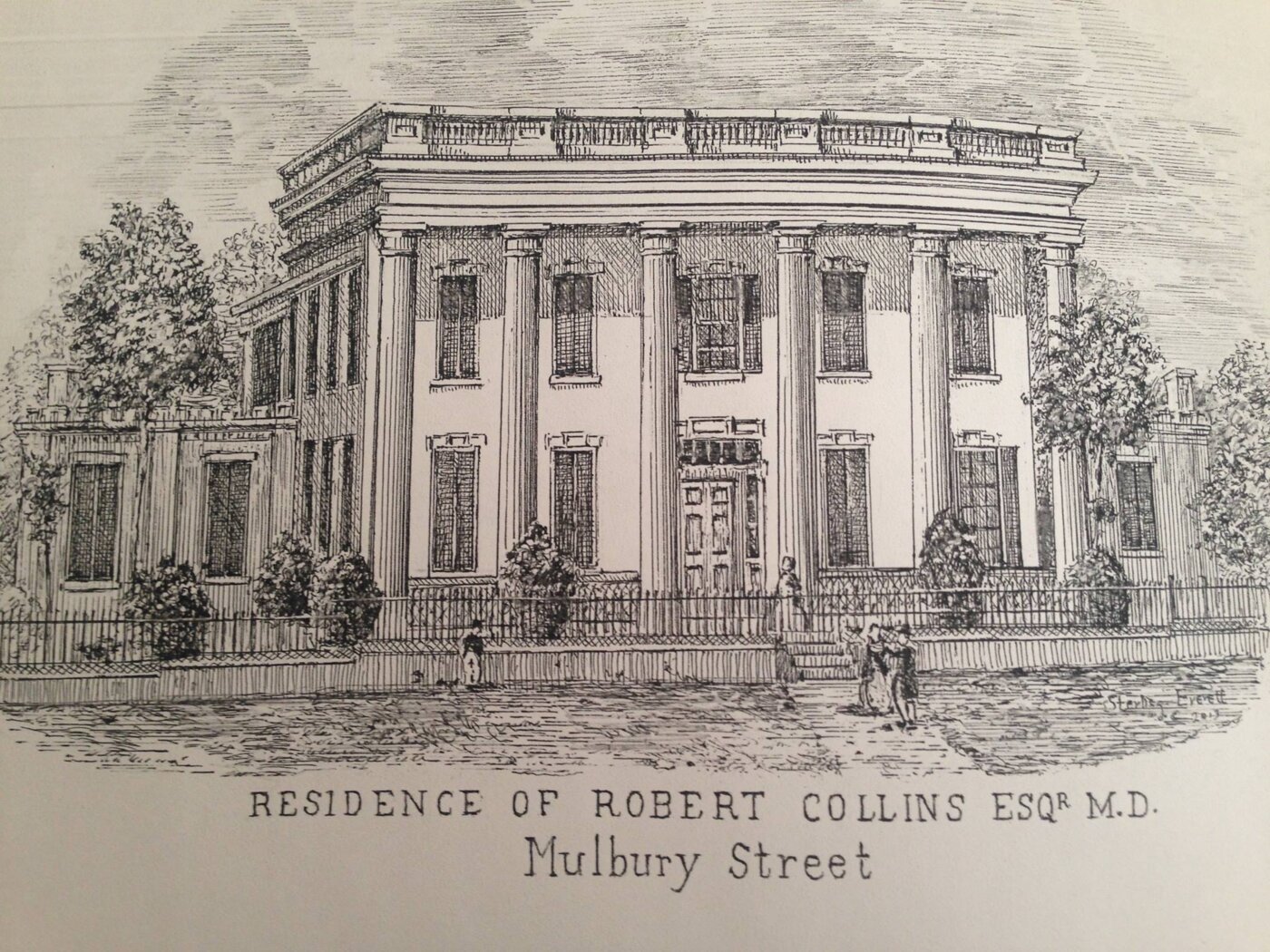
Anonymous, “Residence of Robert Collins ESQr M. D. Mulberry Street” (Illustration, Georgia, United States, [c.1830-1980]). Rights unknown. This sketch depicts the house, owned by Robert and Eliza Collins, from which Ellen absconded in 1848. Ellen, whom the Collins’ enslaved and forced to work as a domestic servant, would have been very familiar with the large house. Her act of defiance gave lie to proslavery apologists and advocates who claimed that enslaved people who worked in domestic settings were somehow better off than other enslaved people.
Shortly after the couple’s 1846 marriage, they planned their escape (McCaskill 2009, 86) from what William later referred to as “the unrighteous & gallding [sic] yoke, which is now crushing over three millions of my unfortunate country men in to a premature grave” (Craft 1853).
A Daring Escape
William and Ellen Craft later reflected on what had prompted them to make their bid for freedom: “[A]bove all, the fact that another man had the power to tear from our cradle the new-born babe and sell it in the shambles like a brute, and then scourge us if we dared to lift a finger to save it from such a fate, haunted us” (Craft 1860, 1-2). The Crafts resolved that any children of theirs would not be born enslaved.
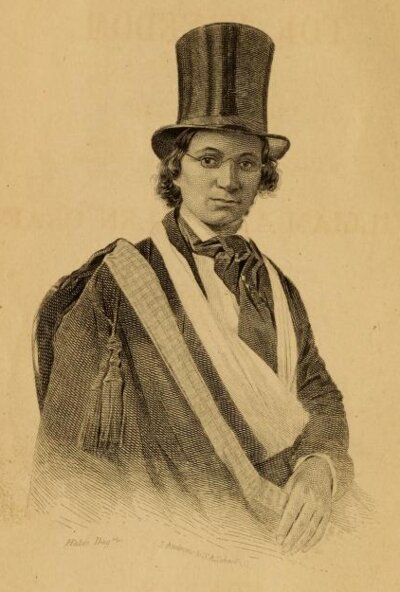
S. A. Schoff, “Ellen Craft in Disguise” in Running a Thousand Miles for Freedom; or, the Escape of William and Ellen Craft from Slavery, by William Craft (London: William Tweedie, [1860]), Internet Archive. No known copyright or restrictions. This sketch of Ellen Craft, created for the book written by William and Ellen Craft in 1860, depicts her as she might have looked during the couple's escape. She wore glasses and a hat, used a sling, and garbed herself in the clothes of a man to hide her gender, race, and associated status as an enslaved person.
Ellen Craft, utilizing the fungible nature of the constructs of gender, race, and class, dressed as a bespectacled well-to-do white man and William postured as her enslaved servant. Leaving Georgia in late December, the couple traveled north by steamer and train through Savannah, Charleston, Wilmington, Richmond, Washington, and Baltimore before arriving in Philadelphia on Christmas Day, 1848 (Craft 1860, 29, 35, 80).
Transatlantic Freedom
Yet the Crafts did not feel their freedom secure even in the nominally free states. Congress passed the Fugitive Slave Law on 18 September 1850, as part of the Compromise of 1850. It required that the citizens in free states aid in the return of freedom seekers who had fled enslavement in the South, making it a federal crime to obstruct the capture of so-called fugitives or attempt to rescue alleged fugitives from slavery. The law suspended due process for individuals accused of being fugitives from slavery, instead stipulating that these individuals be brought before a newly federalized commissioner, who would receive $10 if the accused was found to be a fugitive, but only $5 if the commissioner deemed the proof insufficient.
The 1850 law put all people of African descent at risk of being stolen off the street and sent south into slavery.
The Crafts’ former enslavers sent agents to Boston and even appealed to President Millard Fillmore to aid them in tracking down the couple (Craft 1860, 88, 92). The capture and forced re-enslavement of William and Ellen Craft would have sent an important political message to slavery’s proponents: the federal government was willing to protect their property in enslaved people by reaching deep into the free states. The Crafts became, noted historian Sean Wilentz, “antislavery celebrities” (2005, 646).
Understanding that this newly stringent law meant that they were no longer safe in the North, William and Ellen Craft left the United States. African American activists and white abolitionists mobilized to help them flee Boston. The League of Freedom and the Black-run Vigilance Committee coordinated to hide Ellen and William Craft in the homes of abolitionists Theodore Parker and Lewis Hayden. Abolitionist Samuel May arranged for the couple’s safe passage first to Nova Scotia and then to England (Wilentz 2005, 646).
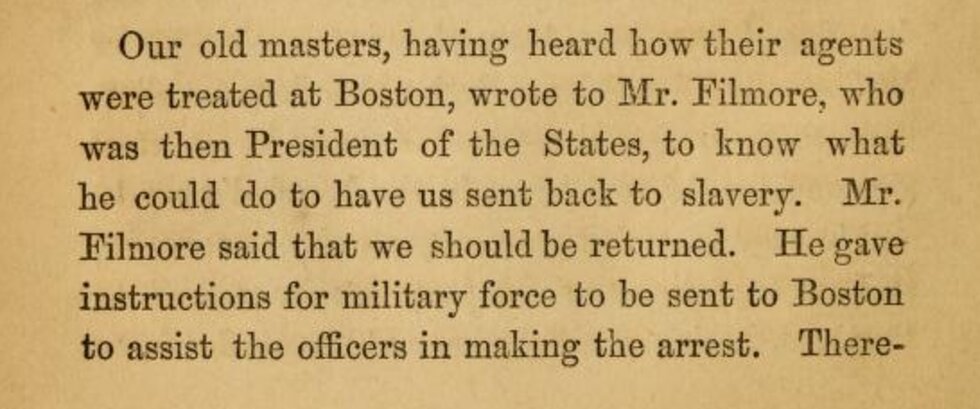
William Craft, “President Fillmore Enlisted,” in Running a Thousand Miles for Freedom; or, the Escape of William and Ellen Craft from Slavery, by William Craft (London: William Tweedie, 1860), 92, Internet Archive. No known copyright or restrictions. In this passage of their book, Ellen and William Craft recounted how their former enslavers enlisted the help of the sitting President of the United States, Millard Fillmore, to try and force the couple back into slavery. President Fillmore decided to enforce the recently passed Fugitive Slave Act, and he prepared to send the US military to Massachusetts. Proslavery Southerners, who professed to stand for states’ rights, were eager to recruit the force of the federal government to enforce the laws that made slavery a national institution.
Despite widespread opposition and resistance to the Fugitive Slave Law in many Northern states, the Crafts resolved to put the Atlantic Ocean between their future family and their former enslavers. They decided it “best, at any sacrifice, to leave the mock-free Republic, and come to a country where we and our dear little ones can be truly free” (Craft 1860, 93).