Introduction
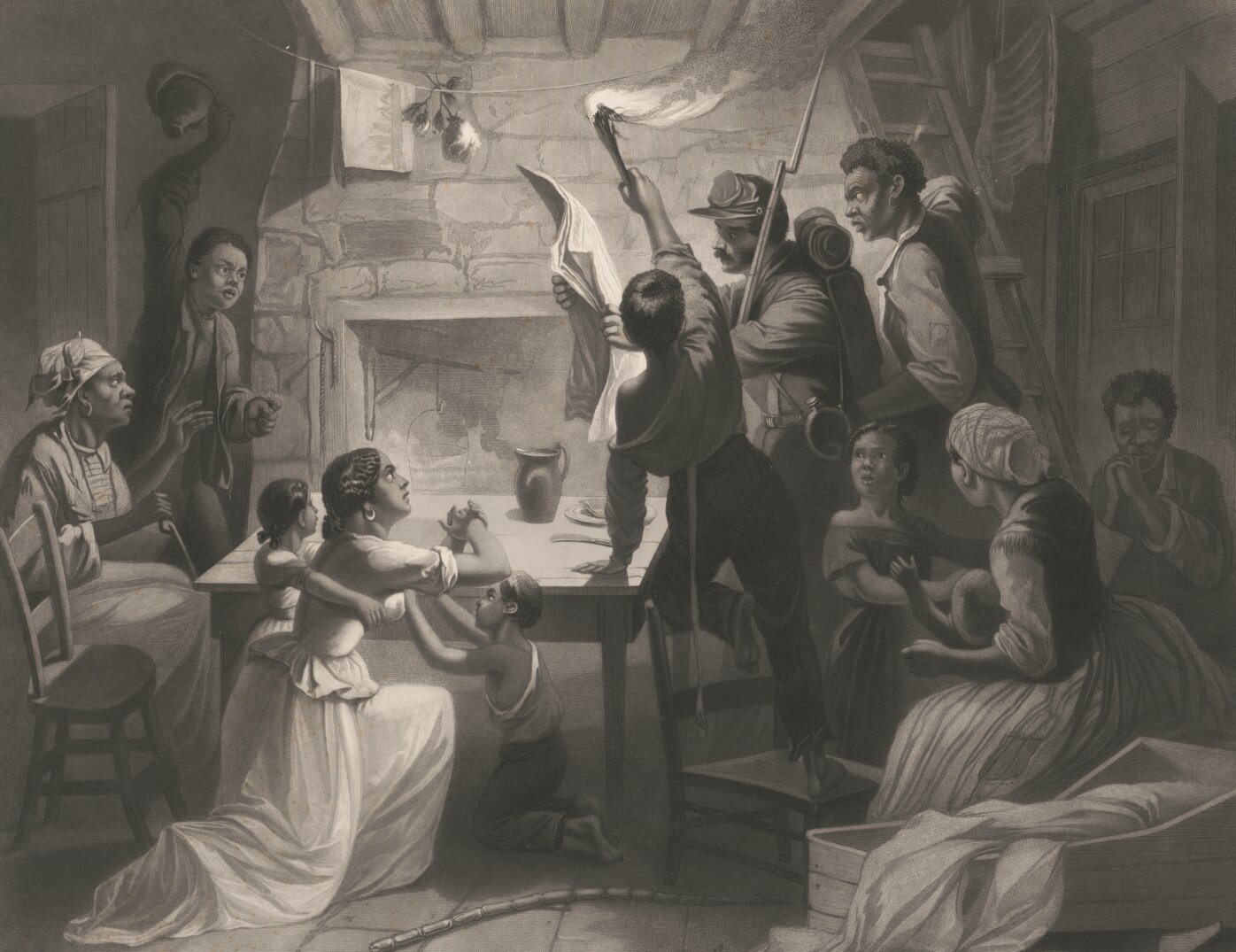
The Craft family watched and waited as civil war unfolded in the United States. In 1863, the Emancipation Proclamation went into effect, and a US victory over the Confederacy followed in 1865. William and Ellen Craft decided to return to home with their family. William Ivens Craft stayed behind to complete his schooling, passing the exam for Cambridge University – news that made headlines across the Atlantic. He represented to both newly freed African Americans and their white supporters the promise of advancement were Black men and women given the opportunity.
On the Periphery
In November of 1865, the Craft family won a hard-fought battle. With the help of a small army of friends on both sides of the Atlantic, William and Ellen Craft successfully located and contacted Ellen’s mother, Maria Smith, after fifty-seven years of enslavement (McCaskill 2009, 59-60). Maria Smith traveled to England – to much regard from the transatlantic press. The monthly London Freed-Man described the emotional reunion between mother and daughter at the Great Northern station, King’s Cross. Ellen brought one of her own children to meet their grandmother for the first time:
An anxious trembling pale-cased lady-like woman, with a little boy by her side, having more of the dusky shadow on his brow than his mother, met that parent so dear to them, who seemed like one risen from the dead (Anonymous 1865).
Maintaining an expanding family proved difficult for the Crafts, however. Although proximal to the monied elite in England, the Crafts themselves were not endowed with intergenerational capital and status. As a result, William and Ellen were forced to give up their home at 12 Cambridge Road and move to Shepherd’s Bush by late 1867 (Anonymous 1989; Craft 1867).
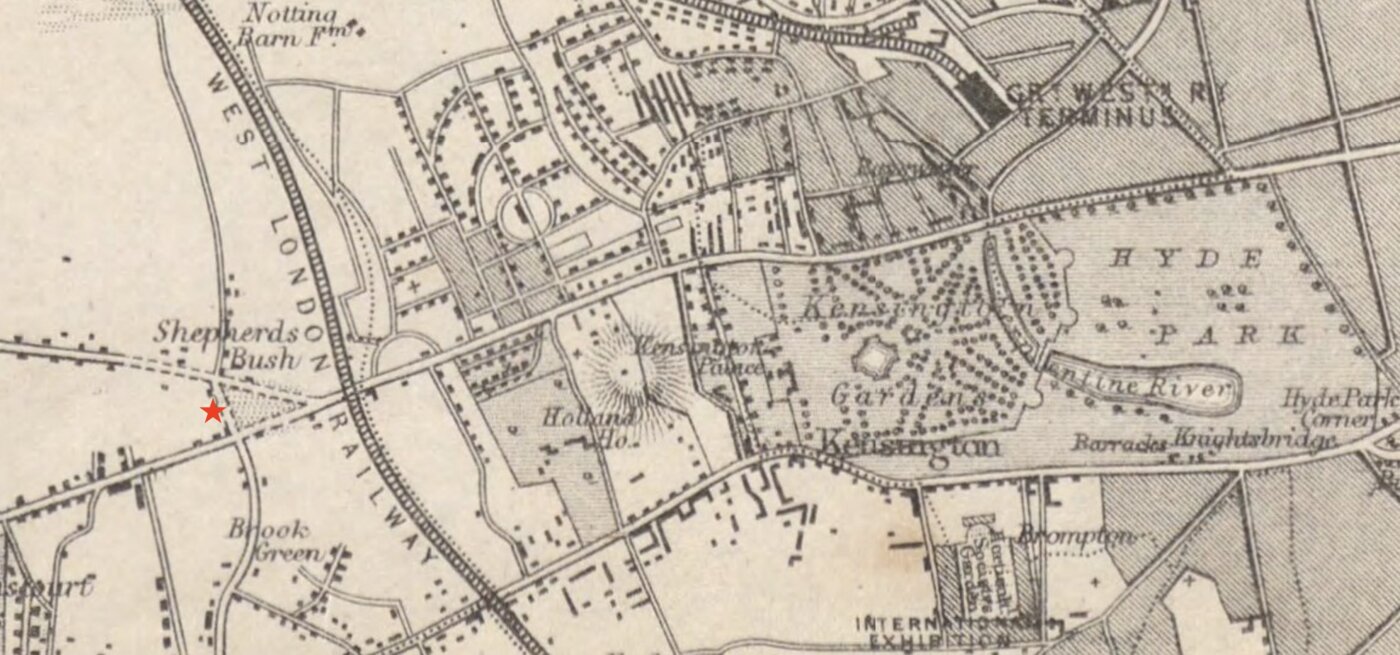
Edward Weller, “'Composite Map: The Environs of London: (Sheet 1)'” (Map, London, United Kingdom, [1863]), detail, David Rumsey Map Collection. Creative Commons Attribution 4.0 International. This map of London, circa 1863, depicts the location of the Craft home at 4 Lawn Place in the Shepherd’s Bush neighborhood, just west of Kensington Gardens and Hyde Park. Unlike today, the area in 1867 was sparsely populated.
In 1868, the Crafts lived in Brixton, at 124 Stockwell Park Road. That year, Ellen gave birth to another daughter, whom Ellen and William named Mary (Craft 1868; Green 2018, 27). By early 1869, the family had moved again, this time to 5 Atkinson Place, Brixton Road (Clark 2023c). The couple “had been thrust into this English upper-class environment for which neither their background nor their income had prepared them,” writes scholar Dorothy Sterling. “[E]ager to stand on his own feet,” Sterling asks (1988, 44), “[h]ow was William to earn a living appropriate to their new station in life?”
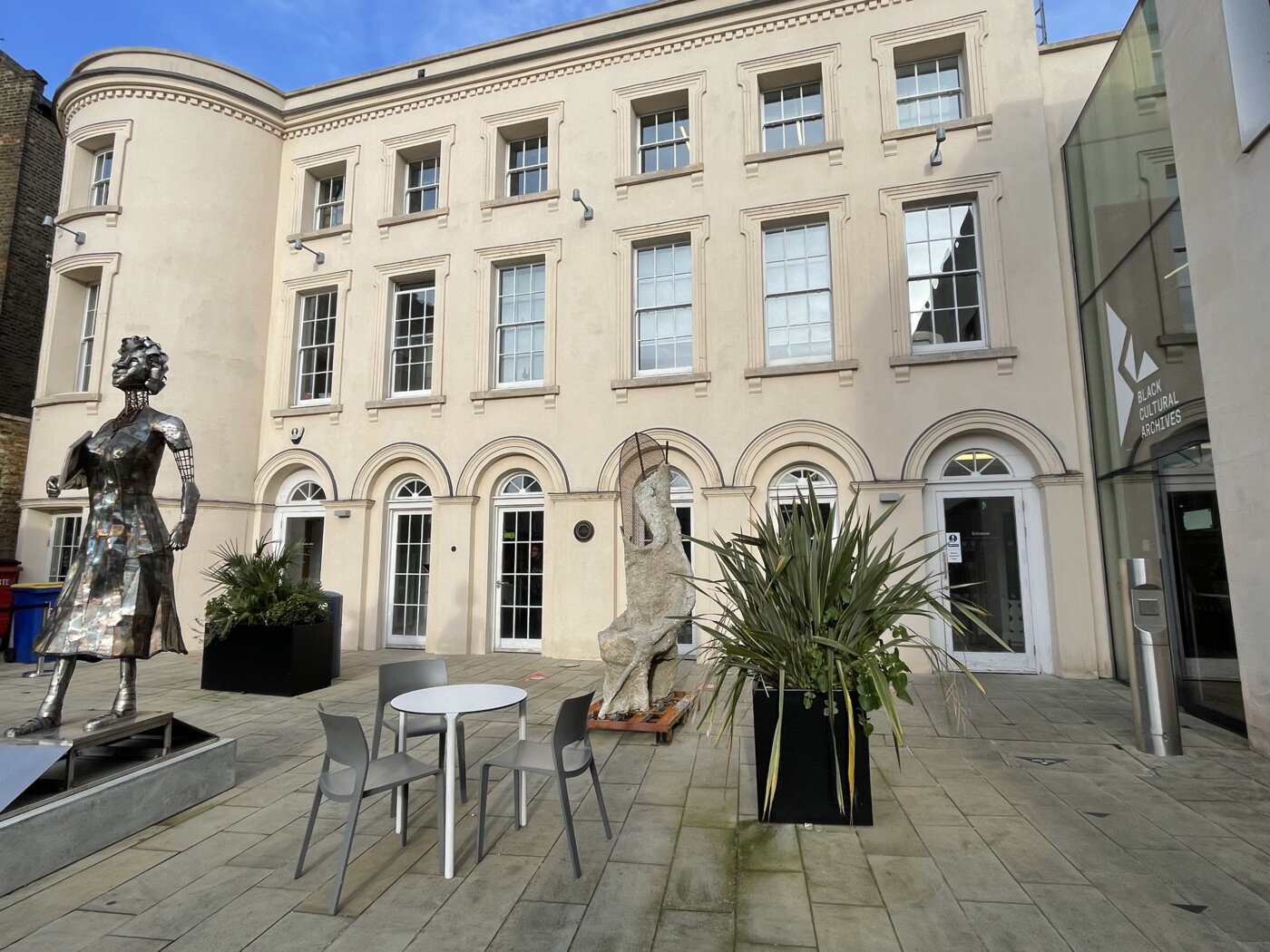
Hope McCaffrey, “Black Cultural Archives Brixton” (Photograph, 25 March 2023), Hope McCaffrey Private Collection. Creative Commons Attribution 4.0 International. The building that houses the current Black Cultural Archives (BCA) in Brixton, London, in 2023. That the BCA are located in Brixton speaks to the importance of the neighborhood and community to the history of Black Britons.
The Crafts’ move to Brixton foreshadowed how this once swampy countryside would transform into a center of Black cultural life. The Black Cultural Archives now stands just a few blocks from where the Craft boys attended school. The Craft residency in Brixton marked the first in a long line of Black activists who lived there. Jamaican-born Olive Morris, who fought for Black women’s and squatters’ rights in the 1970s, and activist-novelist Alex Wheatle, both called Brixton home. The community was also the site of the 1981 Brixton uprising, during which Black activists protested the deaths of thirteen young Black men and women as well as the Metropolitan Police’s racist stop-and-search policy (Aboagye 2022).
The Promise of Reconstruction
Although they had lived for nearly two decades in England, William and Ellen Craft felt the revolutionary promise of Reconstruction, even from across the broad pond. The post-Civil War years in the United States represented a moment of unprecedented opportunity and hope for African Americans, many of whom were newly free. William and Ellen returned to the United States in 1869 with all but two of their British-born children, where their freedom was, at least on paper, thereafter guaranteed by a constitutional amendment (Green 2018, 27). To borrow W. E. B. Du Bois’ words (1935, 26), the Crafts took their chance to stand for “a brief moment in the sun.” Despite all that they had already experienced at the hands of white Americans, the Crafts would soon face again white Southerners’ violent rejection of Black freedom.
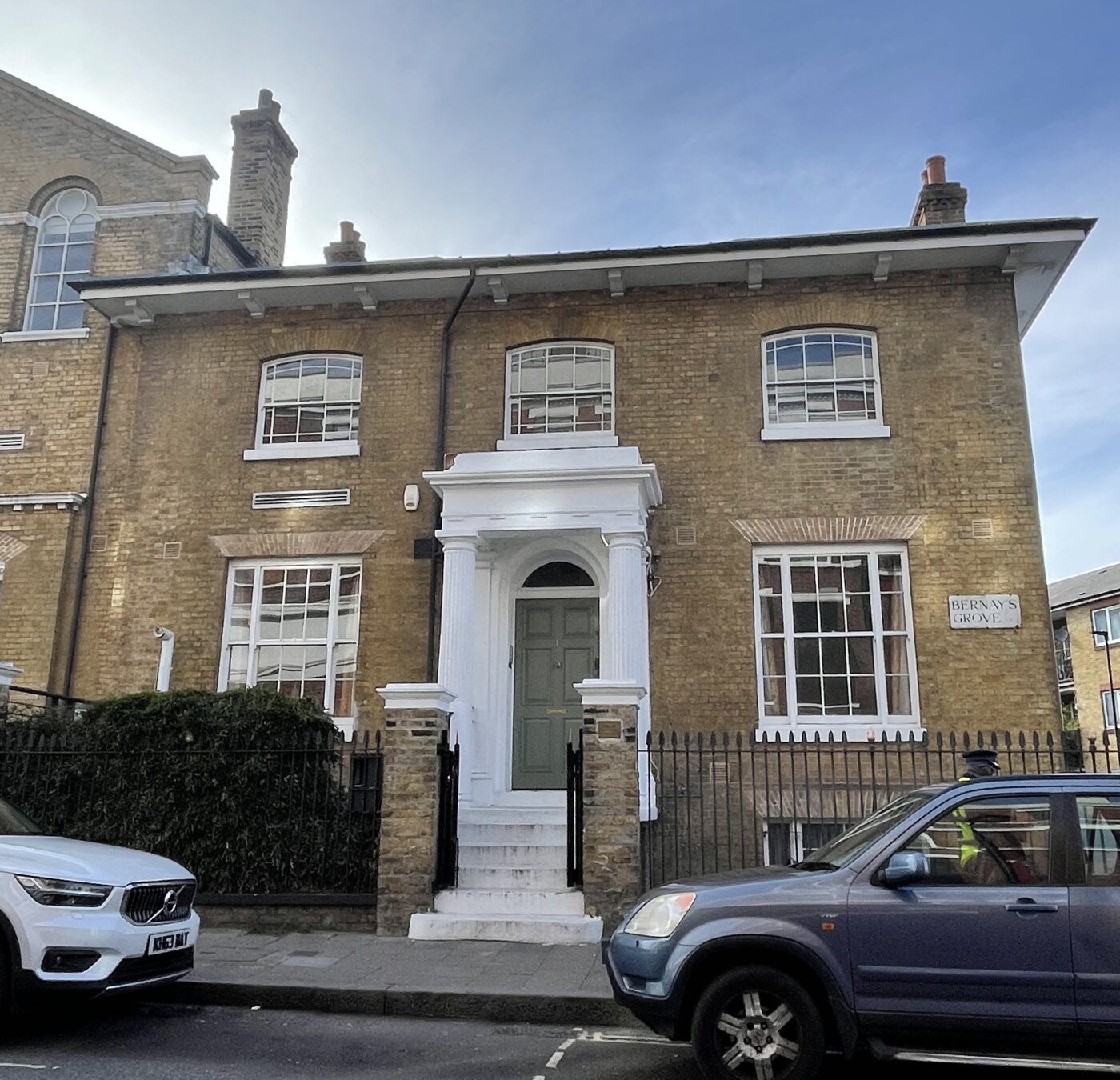
Hope McCaffrey, “Location of Brixton School” (Photograph, 25 March 2023), Hope McCaffrey Private Collection. Creative Commons Attribution 4.0 International. This building, which matches this sketch from the nineteenth century, housed the Brixton Lodge school, attended by William Ivens and at least one of his brothers. William Ivens must have become very well acquainted with this building and the area, as his parents left him and his brother here to study when they journeyed back to the U.S.
William Ivens and Brougham stayed behind in England to finish their education. Although it is unclear what year the boys began school at Brixton Lodge, by 1871 they were listed among the school’s boarding pupils. With the rest of their family across the ocean, William and Brougham appeared in the 1871 England census at the Brixton Lodge on Atkinson Place with schoolmaster Thomas Royal Quicke and upwards of thirty other male “scholars” (one of whom was born in “Hayti”) (“1871 England Census” 1871). Additionally, at some point during their years in England, Brougham was even sent to Boulogne, France, to study (Anonymous 1878e).
Making Transatlantic News and Journeys
The year after his family departed for the United States, fifteen-year-old William Ivens passed the University of Cambridge Local Examinations (University of Cambridge 1871, 19). Passing the exam was no small feat. The teenagers who passed this rigorous assessment were eligible to go on to higher education. By the following spring, this news had spread across the Atlantic and was reported widely and publicly among the Crafts’ friends and indeed throughout the Northeastern United States.
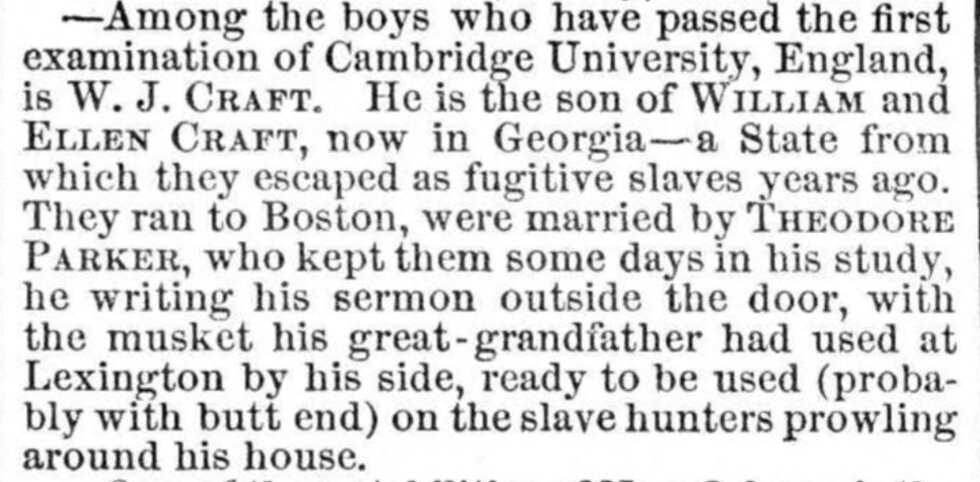
Anonymous, “William Ivens Craft Passes Exam,” Harper’s Bazaar 4, no. 17 (April 29, 1871), Internet Archive. No known copyrights. Although Harper's Bazaar misspelled his name as “W. J. Craft,” William Ivens made international news when he passed the Cambridge University exam in 1871. However, in a rhetorical turn illustrative of how contemporaries and historians alike have whitewished the history of abolition and Black activist movements, the article turns its attention to Theodore Paker and his musket, after only two sentences about William Ivens.
“The son of those runaway fugitive slaves William and Ellen Craft has just passed the first examination of Cambridge university, England,” boasted a Maine newspaper in March of 1871. The following month, a New York paper announced that, “W. J. Craft, son of William and Ellen Craft, whose escape from slavery some years ago made such a sensation, has passed the first examination of Cambridge University, England.” The news even made its way into Harper’s Bazaar: “Among the boys who have passed the first examination of Cambridge University, England, is W. J. Craft. He is the son of WILLIAM and ELLEN CRAFT, now in Georgia – a State from which they escaped as fugitive slaves years ago” (Anonymous 1871a; Anonymous 1871b; Anonymous 1871c).
William Ivens represented to both newly freed African Americans and their white supporters the potential for advancement were Black men and women given the opportunity, and the community held him up for his accomplishments. Yet, instead of enrolling in university, William Ivens Craft and his brother boarded a boat to join their family in a country foreign to the Craft children.