Introduction
Little is currently known or remembered about Louisa Lejeune Craft, William Ivens’ wife and the mother of his children. What we do know is that when she entered William Ivens’ story, she likely changed the course of his life by precipitating his stay in England. However, piecing together and understanding Louisa’s life has proved elusive for researchers and descendants alike. Who was the real Louisa Craft?
Looking for Louisa
Craft descendants recall a family story that had them believe that William Ivens rescued a destitute Irish woman and her children from the streets of London. Historical records, specifically the letters held by the Bodleian Library, show us that it was, probably, the other way around (Copeland and Copeland 2021). What this family story reflects, however, is how little is known or remembered about William Ivens’ wife.
Yet Louisa, it turns out, was not who researchers and descendants alike thought she was. Initially, researchers, genealogists, and descendants believed that Louisa Craft was the daughter of Louisa Spooner and John Gilbert Woodley (a gardener-turned-tailor), born around 1853 in Hackney (“1861 England Census”; “Pallot’s Marriage Index” 1837). However, a recent discovery by family member and genealogist extraordinaire Pamela Knight uncovered the real Louisa.
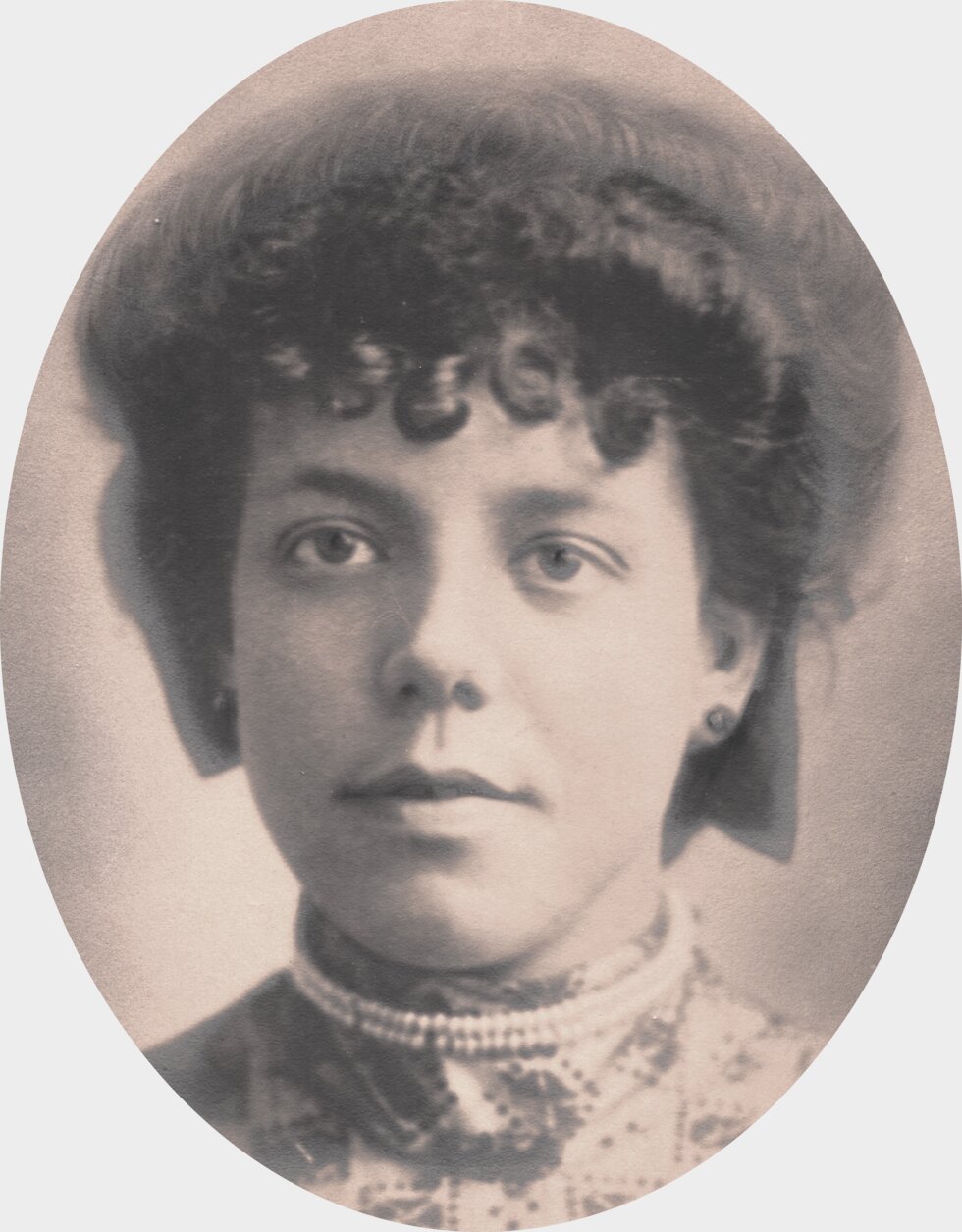
Anonymous, “Ellen Louisa Craft” (Photograph, United Kingdom, [c.1890-1950]), Martin Copeland Private Collection, United Kingdom. Creative Commons Attribution 4.0 International. This is a portrait of Ellen Louisa “Nellie” Craft, eldest daughter and first-born of Louisa and William Ivens Craft, as a young woman, likely at about the same age as her mother was when she met William Ivens. While no known images of Louisa exist today, we can view this photo of her daughter and wonder: might Nellie have resembled her mother?
The woman who married Felix Lejeune and then William Ivens Craft was born Louisa Mary Charouneau on 24 June 1852 in Marylebone, London. Louisa Mary was the daughter of William George Charouneau and Mary Ann Woodley. John Gilbert Woodley, it would seem, was her uncle. Louisa Mary’s father, who was of Huguenot descent, was a tailor. She was baptized at St. Ann’s church in Soho on 29 March 1857 with her sister, Amy Eliza, who was five years younger (“Church of England Births and Baptisms” 1857; Knight 2024a). William Ivens and Louisa Mary were born just three years and several miles apart, but they grew up in different worlds.
Life as a Lejeune
Mystery shrouds Louisa Mary’s childhood. Where did she live and what did she do in the years between when she lived at home with both of her parents, and ten years later, when she was married with children? Why did she, upon her first marriage, give her mother’s maiden name as her last name? And why did she, as a girl of just sixteen years old, marry a Frenchman twenty-four years her elder? Pamela Knight suggests that it is likely that Louisa Mary’s mother died in the early 1860s, after which Louisa Mary may have gone to live with her uncle, which would also explain why John Woodley appeared as Louisa Mary’s father on her wedding day (Knight 2024c). Why Louisa Mary was estranged from her own father remains a mystery, as well.
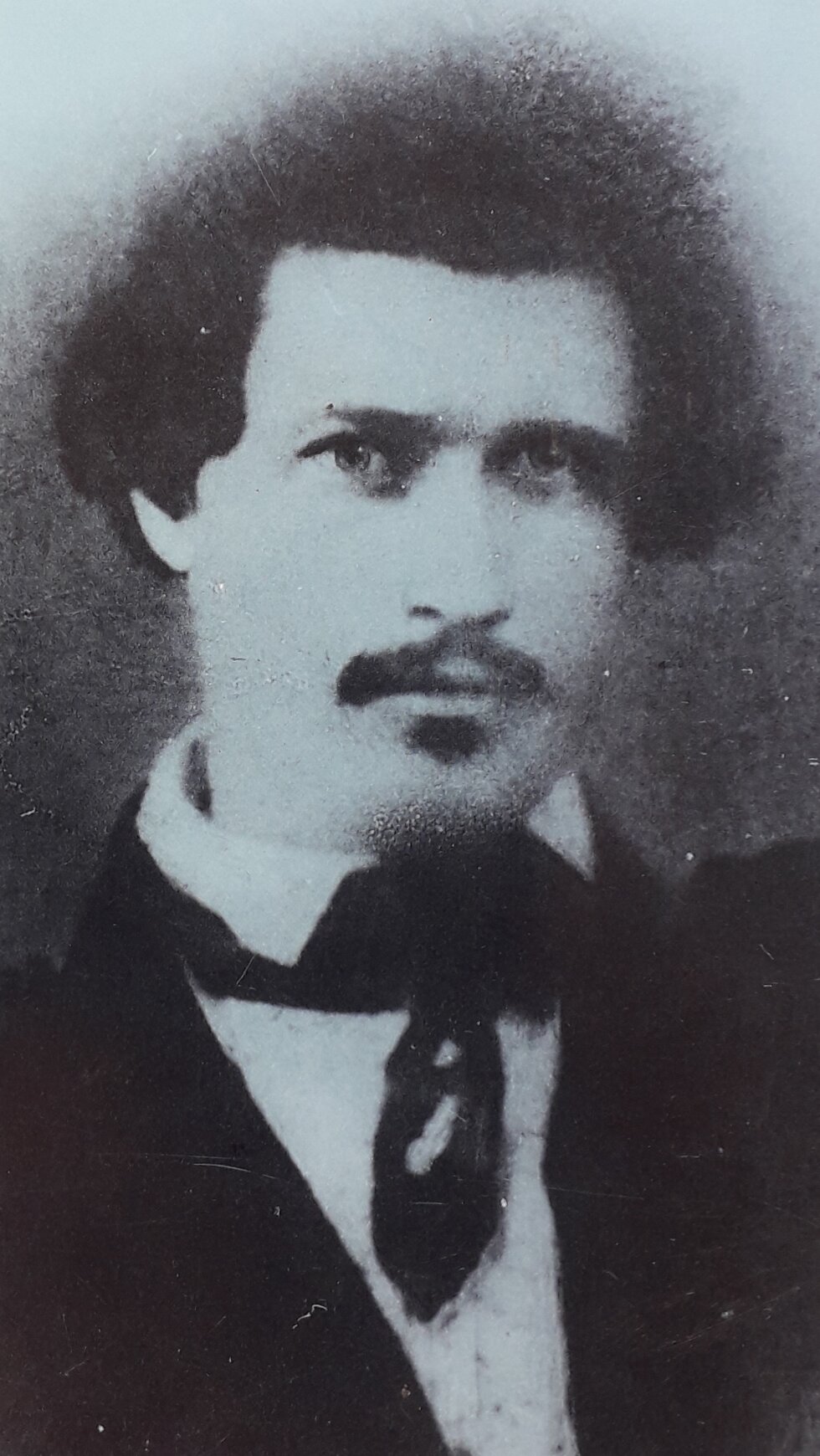
Anonymous, “Felix Lejeune” (Photograph, [c.1829-1884]), Maureen [last name] Private Collection. Creative Commons Attribution 4.0 International. Felix Lejeune, who moved (or maybe even fled) from France to England, was a successful boot maker and a Freemason who apparently had a rather contentious relationship with the fraternity. He married the young woman with whom he lived in 1869, and went on to have a family of at least five children with her. His death precipitated a challenging period for his still young widow.
Louisa Mary, a teenager likely unable to read or write at the time of her marriage to forty-year-old Felix Lejeune in 1869, scribbled a wobbly “X” on the marriage certificate under Felix Lejeune’s flourishing signature. She listed John Woodley, her uncle, as her father. The pair married at the grand St. George’s Parish Church in Bloomsbury (“England Marriages and Banns” 1869). What is apparent is that Felix Lejeune was able to offer Louisa Mary financial security. In the 1870s, the Lejeune household boasted at least one domestic servant. This servant, however, caused the family trouble. In 1878, Felix and Louisa Mary took Annie Church, their servant, to court for stealing a gold ring worth six pounds. Louisa testified in court, claiming that she had spotted the ring at a nearby pawnbroker’s shop. The story circulated in The Standard (Anonymous 1878i).
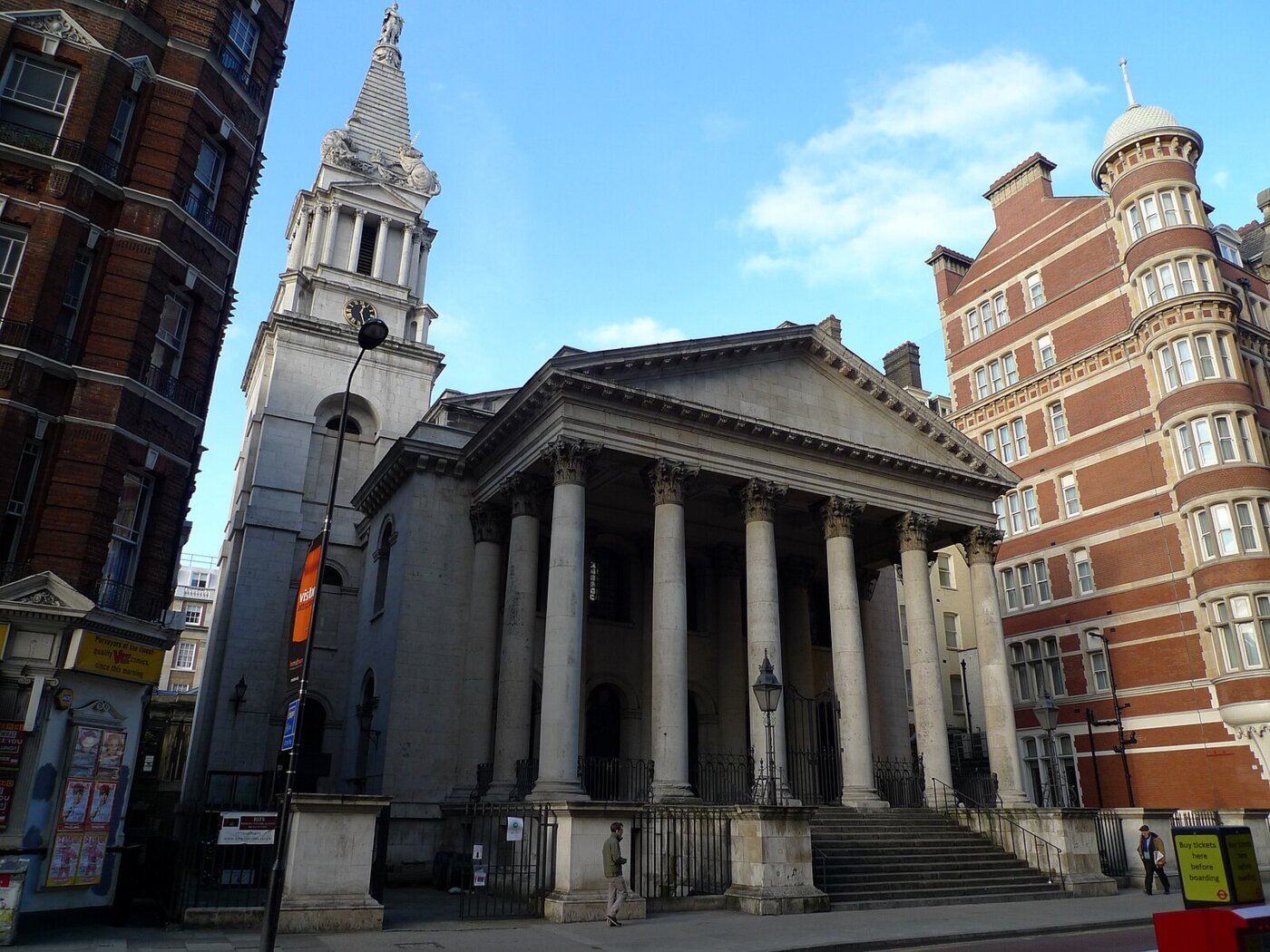
Mark Hogan, “St. George’s Church, Bloomsbury” (Photograph, England, January 30, 2011), Wikimedia Commons. Creative Commons Attribution-Share Alike 2.0 Generic. In 1869, the teenage Louisa Mary walked up the steps and into the great, looming, cavernous church to marry Felix Lejeune.

Louisa Mary may have welcomed the company of someone her own age when William Ivens moved into their modest boardinghouse business in 1882. It is not known how, why, or when their affection grew into love (if indeed it ever did), but less than a year after Felix’s death, Louisa and William Ivens welcomed their first daughter, Ellen Louisa “Nellie” Craft. William Ivens and Louisa Mary, who lived at 16 Little Titchfield Street when Nellie was born, were not married, complicating the family’s tenuous situation. The months and years that followed Nellie’s birth in April of 1884 seem to have been challenging and likely heartbreaking for William Ivens, Louisa, and all of her children.
A Family Separated
On the first of October, 1884, Louisa Mary was admitted to the St. Pancras workhouse with three of her children (“London [...] Selected Poor Law Removal” 1884). These workhouses – sometimes referred to as poorhouses – were deficient social safety nets for those who struggled to find work, food, and lodging in the tumultuous era of industrialization.
The sum Felix left Louisa Mary did not last the family long, as the workhouse was known as a place of last resort. Before going to St. Pancras, Louisa Mary likely would have needed to first apply for financial assistance from the Overseers of the Poor. Once she did that, she was required to enter the workhouse and part from her children, who were sent to children’s homes. As family member and researcher Pamela Knight reminds us, there is very little we can assume or know about the struggles the young couple faced in these years – and why they made the choices they did (if in fact it was up to them at all) (Knight 2024b).
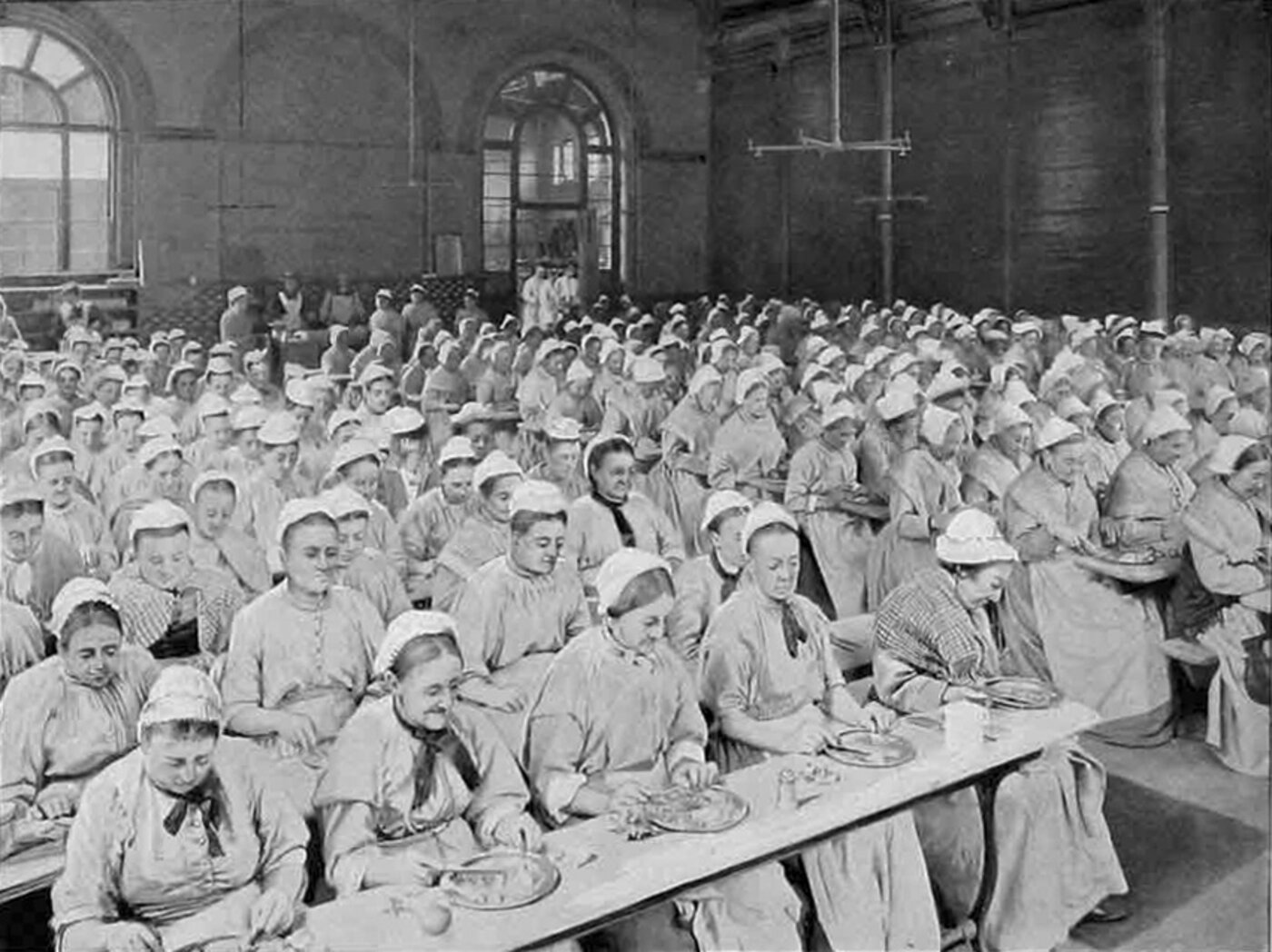
Anonymous, “Women at St. Pancras Workhouse” (Photograph, England, [c.1911]), Wikimedia Commons. Public domain. It is unclear why Louisa Mary spent time in the St. Pancras workhouse. But what we do know is that it was a challenging time for her, as she was separated from her children as well as William Ivens, the father of her youngest daughter. Moreover, workhouse inmates performed labor-intensive jobs including cleaning, cooking, and doing laundry while living in sordid, overcrowded conditions and subsisting on paltry rations. Luckily, Louisa Mary was able to leave and return to a life and family beyond the workhouse walls – a fate many did not share.

The two eldest Lejeune sons, Charles and Henry, went to an orphanage school in Birmingham, and Arthur and Ernest ended up in Brentwood. Henry Lejeune later recalled for his descendants the experience of being put on a train bound for Birmingham at the London Midland Railway Station at the age of five. He remembered being passed from adult to adult, the last guardian receiving six pence to escort the young boy to his assigned institution. A Lejeune descendant, Maureen Barnes, shared Henry Lejeune’s memoirs. Although Henry “remained in Birmingham continuously for some 5 years until the age of about 11,” Barnes explains, he rarely spoke “of this period in later life, preferring to submerge the painful memory” (Barnes 2024b).
The family was further split up when Jean Louis Lejeune, Felix’s brother, arrived from France in order to help administer Felix’s estate – according to Lejeune family history. When he returned to France around 1884, he brought his eleven-year-old niece, Louisa Mary’s eldest child, Louise, with him, raising her as his own daughter (Barnes 2024b).
Together, Again, Forever
William Ivens and Louisa were reunited and subsequently married in the spring of 1888 in Holborn (“Marriage Index” 1888). Three years later, their family came together again under one roof. And it even grew by three: Clara Eugenie was born in 1888, William Alfred in 1889, and young Brougham – named for his uncle – in 1891. William Ivens found employment doing domestic work. Fifteen-year-old Charles Lejeune worked as a shoemaker’s assistant and thirteen-year-old Henry, who had returned after spending five or six years in Birmingham, was employed as an “office boy.” Altogether the household numbered ten. They lived first in Chelsea and then at 57 New Broad Street, in Bishopsgate (“Register of Birth” 1889; “1891 England Census”; Barnes 2024b).
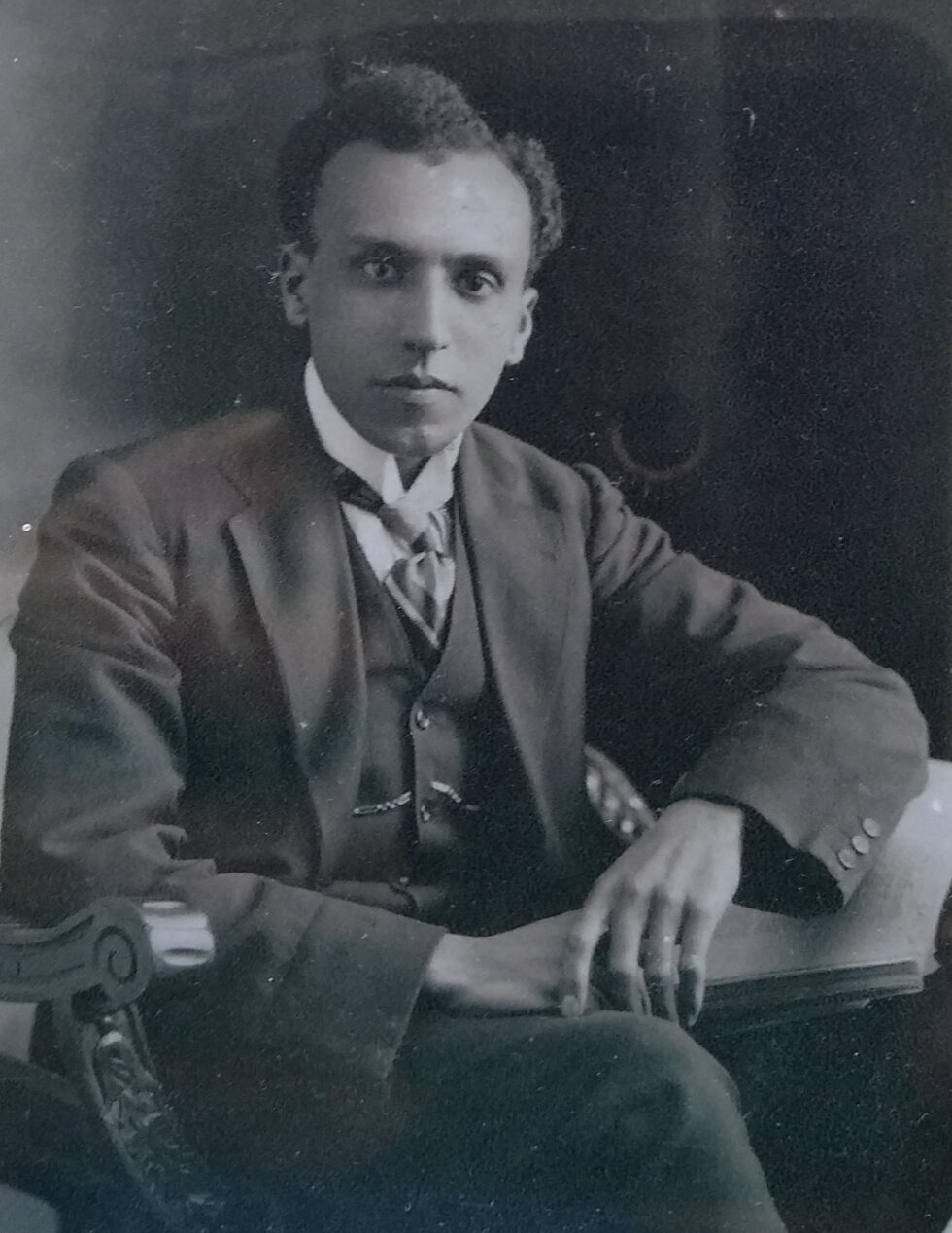
Anonymous, “William Alfred Craft” (Photograph, United Kingdom, [c.1889-1929]), Martin Copeland Private Collection. Creative Commons Attribution 4.0 International. William Alfred Craft, son of Louisa and William Ivens Craft, born in 1889, and named after either William Ivens or his father (or both), and William Ivens’ younger brother, Alfred.
Louisa Mary – the real Louisa Mary – remains one of the most elusive characters of this story. While researchers and descendants continue to piece together the dramatic lives of the British Craft lineage, we continue to rely on family memories and scarce documents to find and understand Louisa Mary (Charouneau Woodley Lejeune) Craft.