Introduction
With three wage-earners, the Craft family experienced a period of relative stability in London – at least in comparison to the previous tumultuous years of scarcity. The more stable William Ivens’ life became, however, the less paper trail he seems to have left behind. As a result, historians must rely more on family and oral histories to trace the years after William Ivens married Louisa.
Family, Joy, and Sorrow
Though he was seemingly finally financially secure, and had managed to bring his and Louisa Mary’s families together, William Ivens nonetheless experienced hardship in the 1890s. Ellen Craft, William Ivens’ mother, passed away in 1891 back in South Carolina (Copeland 2021). Where exactly, when, and why Ellen Craft died, as well as her place of rest, are questions that continue to remain unanswered, despite extensive and labor-intensive research on the part of many Craft descendants, scholars, and biographers. It is believed that the Craft family buried her under her favorite tree on the Woodville plantation, in a farewell gathering that William Ivens likely could not and did not attend (Sterling 1988, 59).
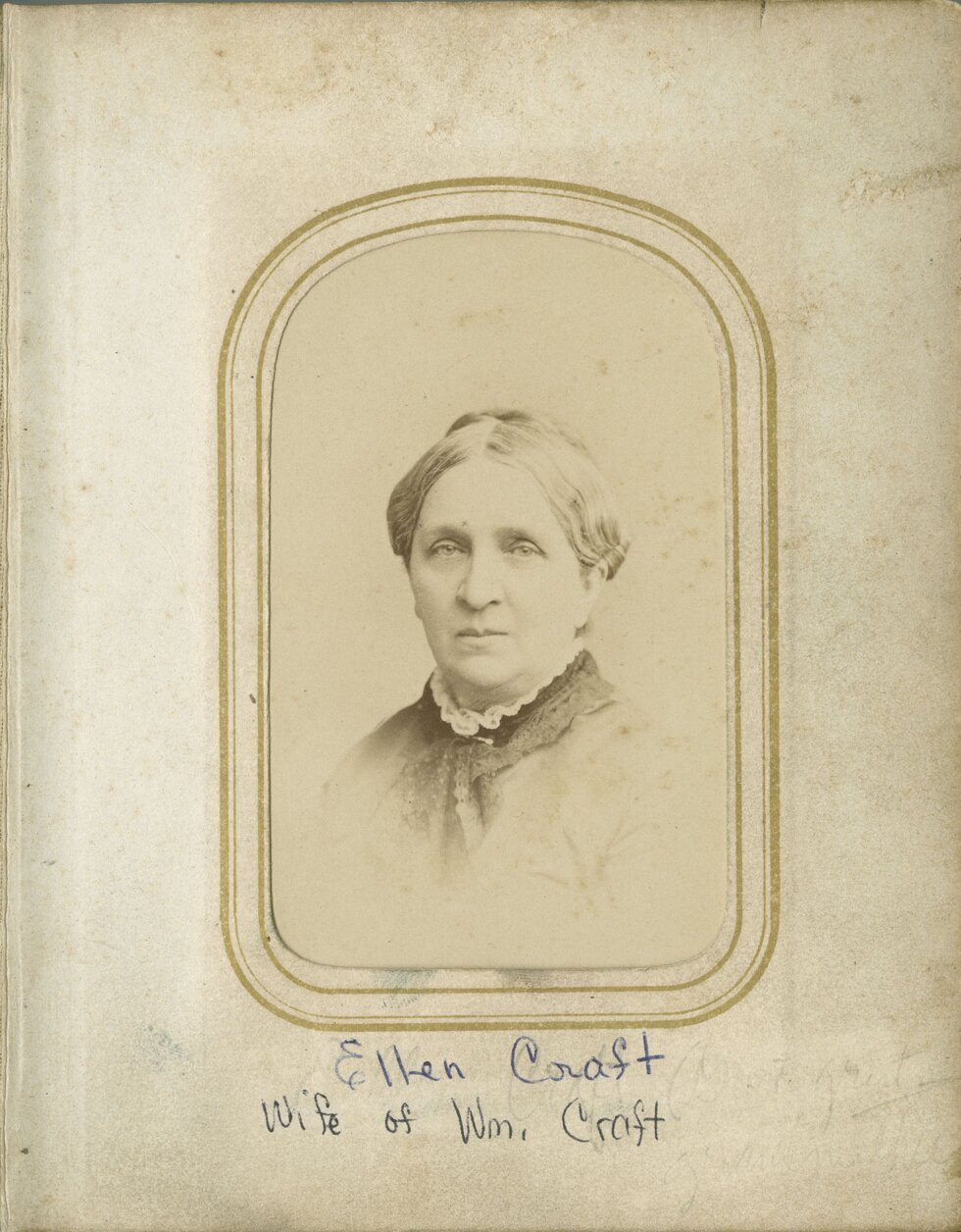
Anonymous, “Ellen Craft” (Photograph, [c.1880s]), AMN 1102, Avery Research Center, Charleston, United States. Courtesy of Avery Research Center for African American History and Culture, College of Charleston Libraries. All rights reserved. This is one of 7 images published by this project, all of which exhibit the same material characteristics due to coming from a single album held by the Avery Research Center. A portrait of Ellen Craft later in her life. The unanswered questions surrounding her death remain active areas of inquiry for Craft descendants and researchers alike – who still hold out hope that her final resting place will soon come to light.
Yet there was much to keep William Ivens occupied at home in England. In 1891, the expanding British Craft family household consisted of William Ivens and Louisa, the children from Louisa’s first marriage to Felix (Charles C. Lejeune, 15; Henry G. Lejeune, 13; Arthur Lejeune, 11; and Ernest Lejeune, 9), and the Craft children: six-year-old Ellen Louisa Craft, four-year-old Clara Eugenie Craft, two-year-old William Alfred Craft, and the baby, Brougham Craft (“1891 England Census”). Later that year, however, just months after he was enumerated by the census taker, Brougham Craft tragically passed away (Copeland 2021). Brougham, named after William Ivens’ brother, was just one year old.
William Ivens, with three children of his own, also took on the role of caretaker for some of the Lejeune children. In 1893, William Ivens signed as the “Parent or Guardian” for young Earnest Lejeune to enroll at the St. Aloysius School in Camden (“London [...] School Admissions and Discharges” 1893).
While William Ivens spent his days laboring at the wharf and nights likely tending his family, a new generation of Black activists traveled to England to continue the fight for justice and against the "afterlife of slavery" in the U.S. (Hartman 2008). In the 1890s, African American activist and journalist Ida B. Wells brought her anti-lynching campaign to British soil, calling on white Britons to face their own legacies of white supremacy and supporting the slave economy even after British abolition. Black activist D. E. Tobias also traveled to England to compare its prison systems to the US system of convict leasing (Murray 2020b; 2023). These activists argued, notes historian Hannah-Rose Murray, that “contrary to popular belief, U.S. chattel slavery had never actually died,” but had “mutated and evolved,” preserving “the legacies of centuries of oppression” (Murray 2020b).
This was a fact William Ivens knew well, and had expressed in his letters in the early 1880s. Unlike his parents, William Ivens did not join this transatlantic cohort crusading for justice. He did, however, assert his rights to citizenship and personhood in quiet ways. Extant records also show that William Ivens registered to vote in 1900, and consistently exercised that right of citizenship throughout the years he lived at 30 Nine Elms Lane – a right that his brothers in the US likely had much difficulty securing (“1901 England Census”; “Electoral Registers,” 1900; 1901; 1902; 1903; 1904; 1905; 1906).
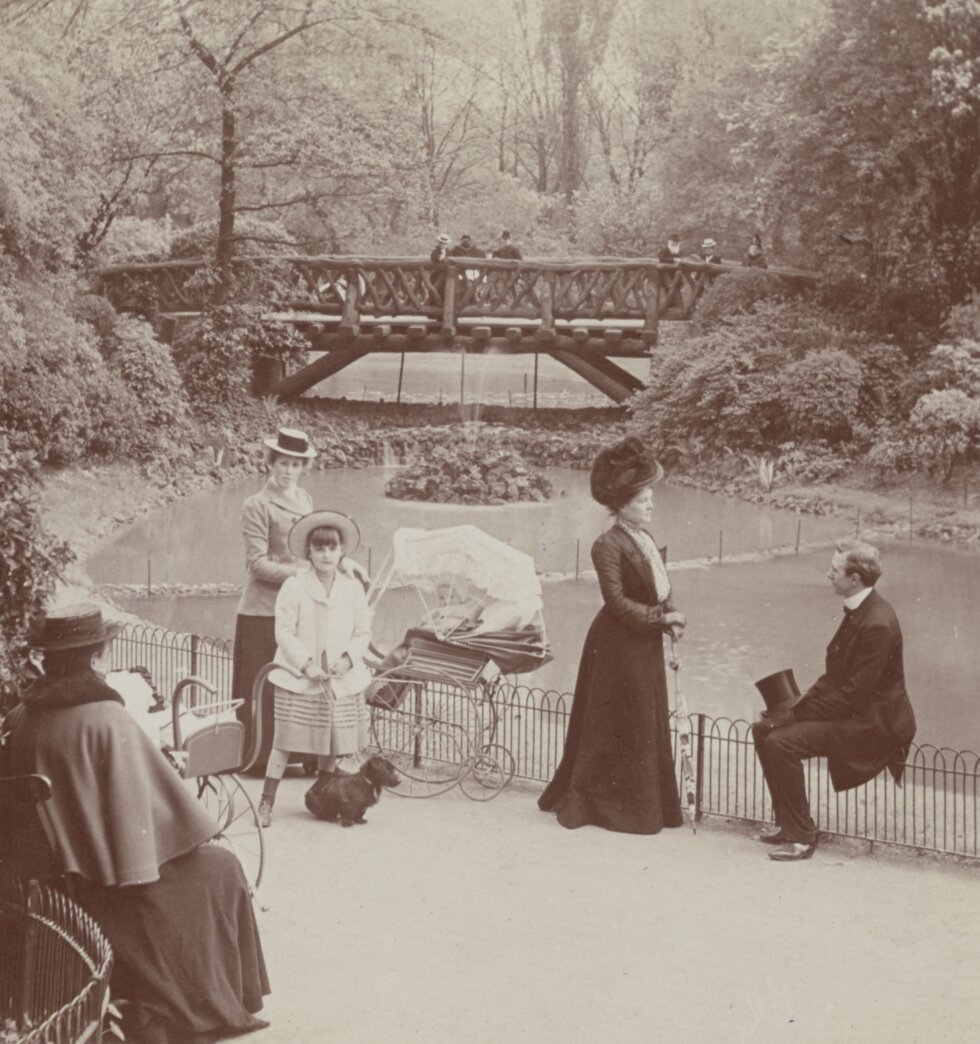
Anonymous, “‘In Lovely Battersea Park, London, England’” (Photograph, London, [1902]), STEREO FOREIGN GEOG FILE - England--London--Parks--Battersea [item] [P&P], Prints and Photographs Division, Library of Congress, Washington, United States. No known restrictions on publication. A proper Victorian scene in Battersea Park, around the same year that William Ivens and Louisa moved to the neighborhood with their children.
Yet William Ivens also experienced great loss as the new century arrived. Sadly, Louisa Mary’s son, Charles Christian Lejeune, passed away at the young age of twenty-one years in 1897 (“Church of England Deaths and Burials” 1897). In January of 1900, William Ivens received the news that his father and namesake had passed away in the home of his sister, Ellen Craft Crum (Green 2018, 143). And the British Crafts kept moving. In 1901 they relocated to Battersea. William Ivens, Louisa, and their children, Ellen, Clara, and William A., resided along the Thames, at 30 Nine Elms Lane, and William Ivens worked as a wharf clerk. The house the Crafts lived in no longer exists in this neighborhood of London, but old photographs reveal that at the time its quiet, tidy streets were lined with cafes hawking ginger beer and breakfast steaks (Clark 2022d).
Henry Lejeune, by 1911, had married and grown his family to four. He, his wife, their son Sydney Maurice and their daughter Doris Louise all lived in Hampstead, and Henry was gainfully employed as an assistant in a “Hatter Shop” (“England Census” 1911a). Arthur, who lived until 1967, married Henrietta Watkins in 1906 and the couple had at least three children (“Civil Registration Death Index” 1967; “Church of England Marriages and Banns” 1906; “England and Wales Register” 1939a). Ernest married a woman named Annie several years after his brother Arthur’s wedding. In 1939, the brothers lived near each other in Margate, Kent. Ernest worked as a hotel porter and Arthur as a “Head Hotel Hall Porter” – perhaps they even worked together (“Church of England Marriages” 1912; “England and Wales Register” 1939b).
“I Shall be Alright”
Rather than hold his old promise to Elizabeth Pease Nichol and return to his family in the United States, William Ivens instead stayed and built his life in London – likely due in no small part to the changes wrought by his fateful change of lodging in 1882. As he had written to Chesson that day, “I shall be alright” (Craft 1882d).
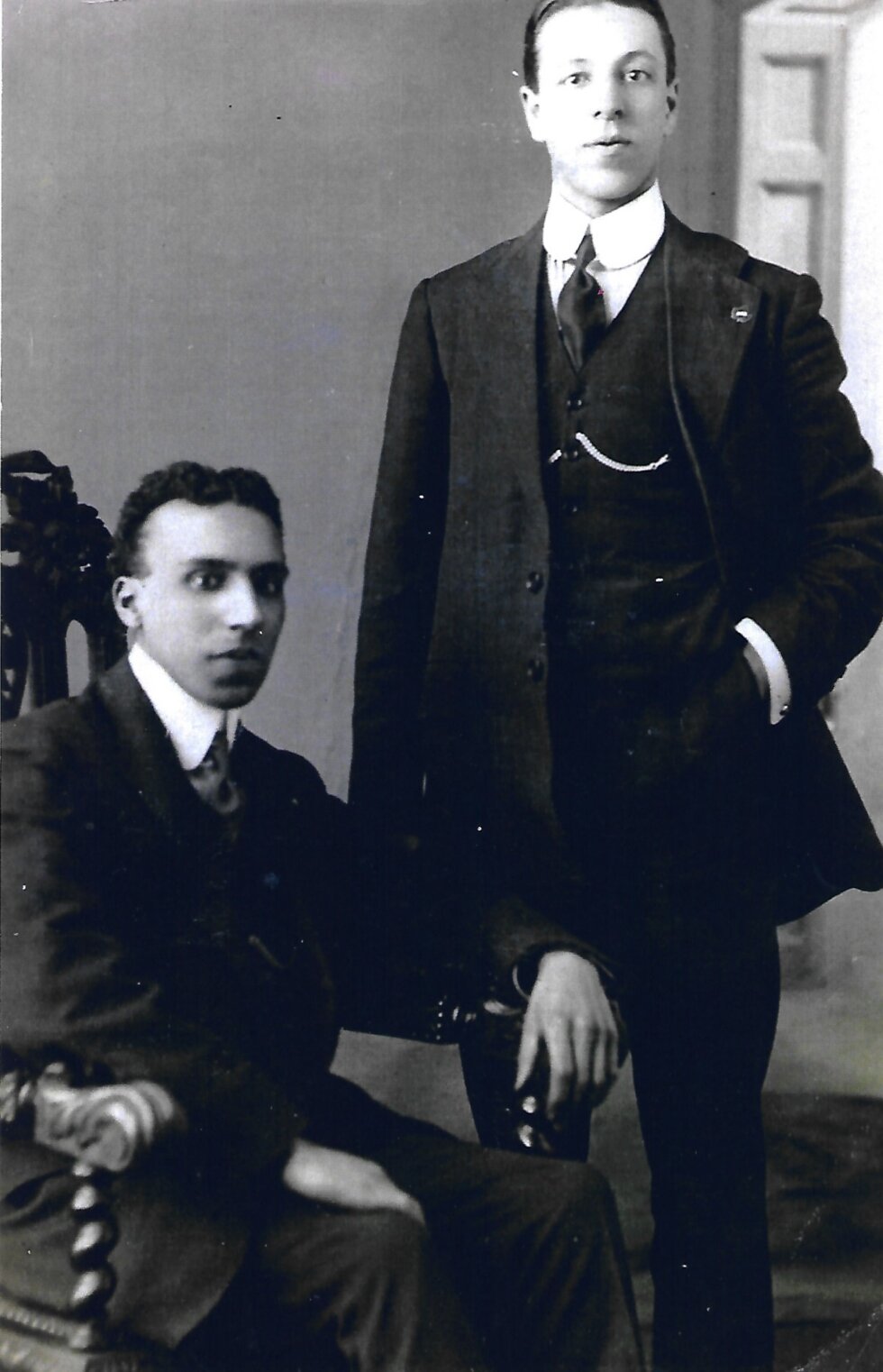
Anonymous, “William Alfred Craft” (Photograph, United Kingdom, [c.1889-1929]), Martin Copeland Private Collection. Creative Commons Attribution 4.0 International. William Alfred Craft (son of William Ivens and Louisa) and his business partner. They ran an X-ray agency that supplied the machines to hospitals.
William Ivens marked something new on the 1911 census; he had to record himself as a widower. In March of 1908, at the age of fifty-six, Louisa passed away (“Death Index” 1908). Nevertheless, William Ivens and his children remained a closely knit family. Three years after Louisa’s death, William Ivens was working as a coal agent and living with his eldest daughter, Ellen Louisa Craft, then twenty-five, William Craft Jr, then twenty-two-years-old and working as a storekeeper at an electric meter manufacturer, and with Joy and Alfred Conway, ten and three years old, respectively, who are marked as “cousins” in the census. Living at 206 Ashmore Road in London, William Ivens filled out and signed the 1911 census form himself (“England Census” 1911b).
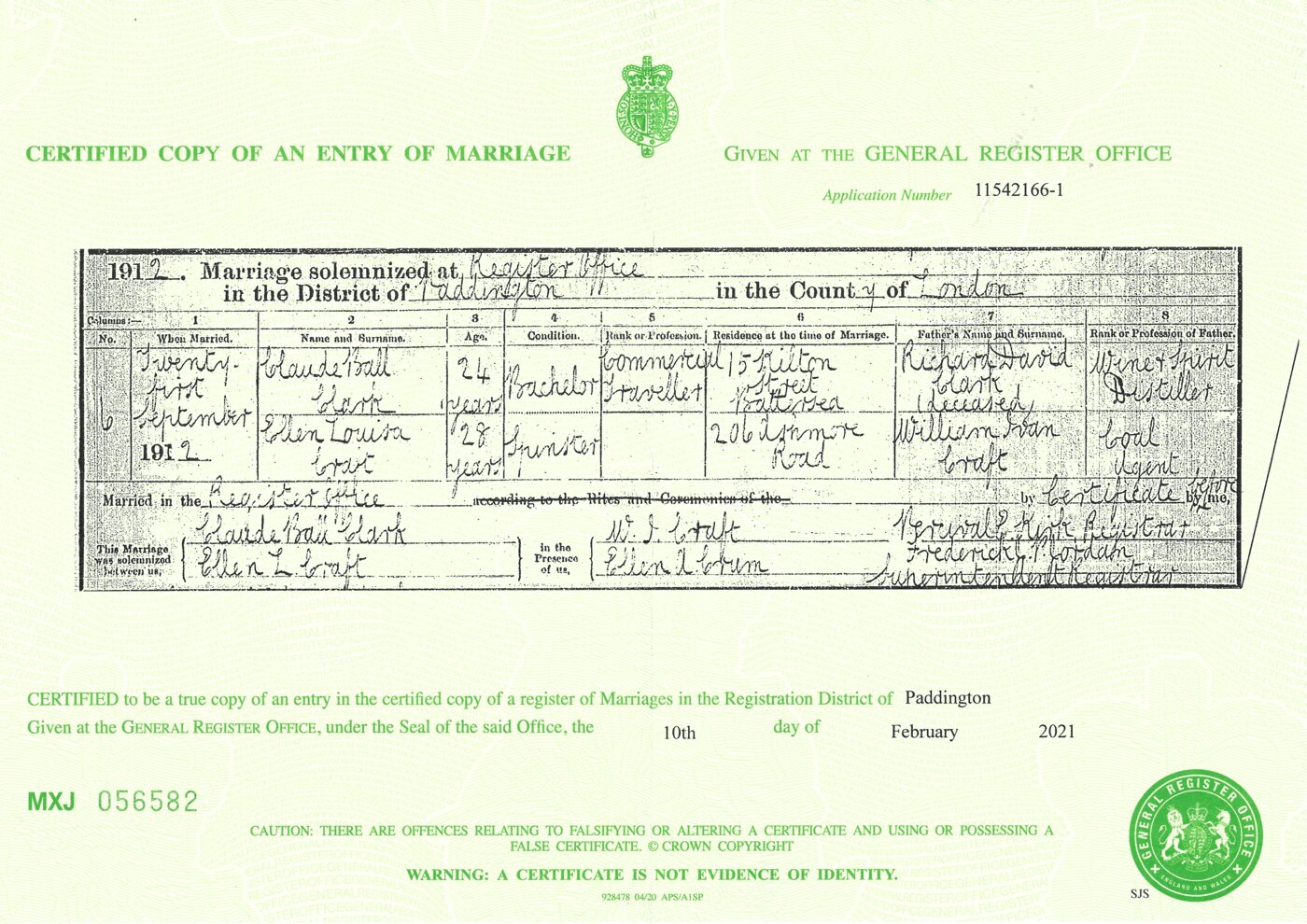
Anonymous, “Clark Wedding Certificate” (Manuscript, England, 21 September 1912), Chris Clark Private Collection. Creative Commons Attribution 4.0 International. In 1912, siblings William Ivens Craft and Ellen A. Crum came together in Paddington after many years apart to witness the wedding of Nellie, William Ivens' eldest daughter, to Claude Ball Clark.
The next year, in 1912, after what the descendants were told was an unusually lengthy courtship, William Ivens’ eldest daughter, Ellen Louisa Craft – who went by Nellie – married Claud Ball Clark (Copeland 2022; 2021). Some descendants maintain that the delay in nuptials was due to the Clark family’s objections to Nellie’s mixed-race background (Copeland 2023a). William Ivens, still employed as a coal agent, was a witness at his daughter’s wedding in Paddington. Ellen Craft Crum traveled a distance to attend her niece’s wedding (Green 2018, 143; Clark 2021).