Introduction
Constantly trying to “economize,” William Ivens moved again in August of 1882. The move proved to be a fortuitous one, as it marked the beginning of William Ivens’ new life as a family man. He cultivated deep and meaningful roots in England through his children and through the importance he came to place on family.
Meeting the Lejeunes
William Ivens attempted to survive unforgiving Victorian London partly by saving costs on housing. In August of 1882, one year after his return to his homeland, William Ivens moved in with the white Lejeune family in order to save money. Felix Lejeune was a bootmaker who lived with his wife and children at 35 Charlotte Street, Fitzroy Square.
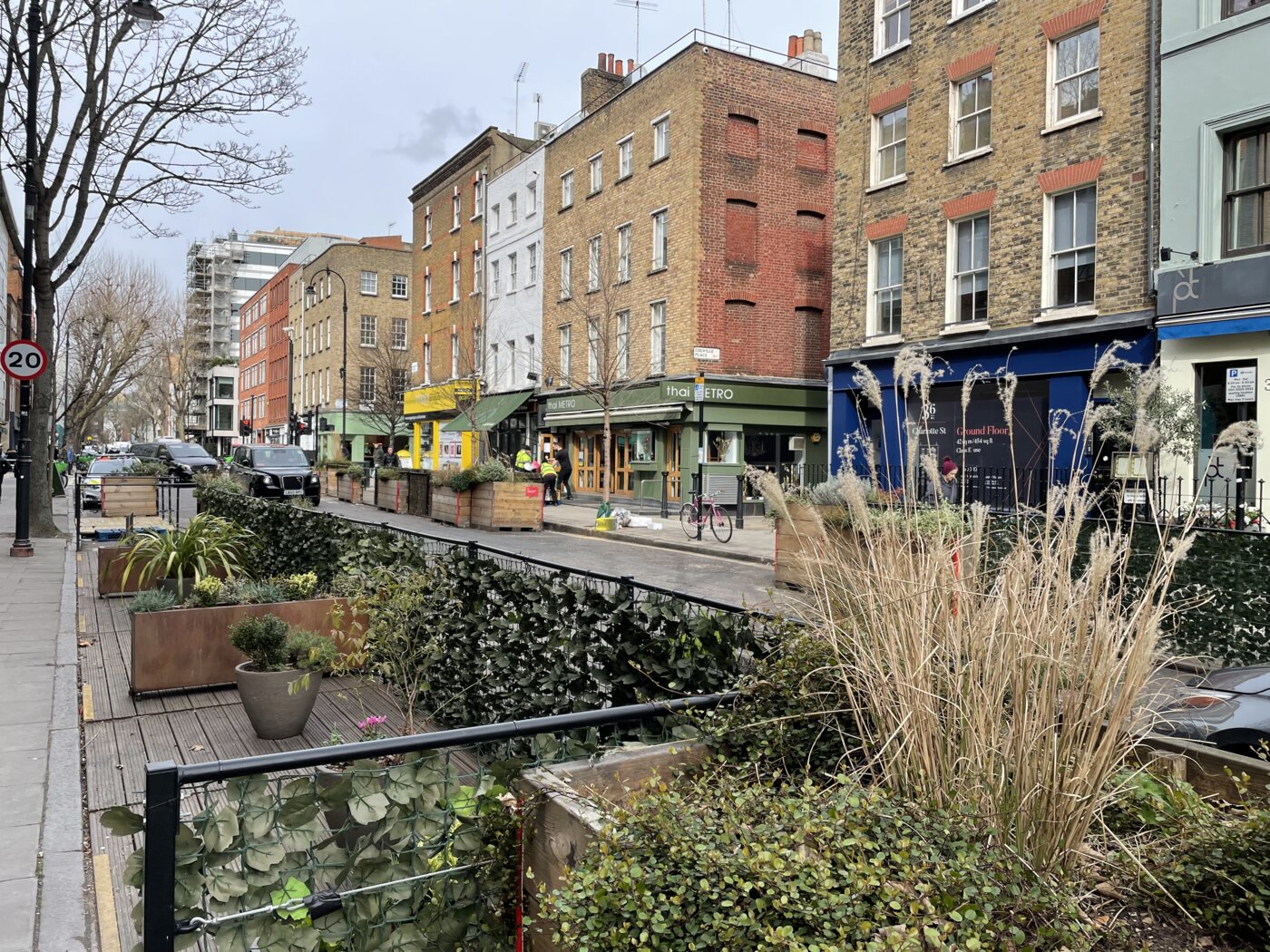
Hope McCaffrey, “Charlotte Street” (Photograph, London, 15 March 2023), Hope McCaffrey Private Collection. Creative Commons Attribution 4.0 International. Present-day (2023) view of Charlotte Street in Fitzroy Square, where William Ivens moved in with the Lejeunes, seeking to “economize to a minimum.”
A prominent citizen, Felix Lejeune was also a member of the England United Grand Lodge of England Freemasons (“1871 England Census”; “United Grand Lodge” 1864). Born in France around 1829, forty-year-old Felix Lejeune married London-born, sixteen-year-old Louisa Mary Woodley on 5 April 1869 (“England Marriages and Banns,” 1869). When they took William Ivens on as a boarder, the Lejeunes had four children, at least one servant, and Louisa worked making waistcoats (“1881 England Census”; Green 2018, 27; Anonymous 1878i). According to the Lejeune family descendants, Louisa also ran a boarding house on Charlotte Street to bring in a few extra pounds (Barnes 2024).
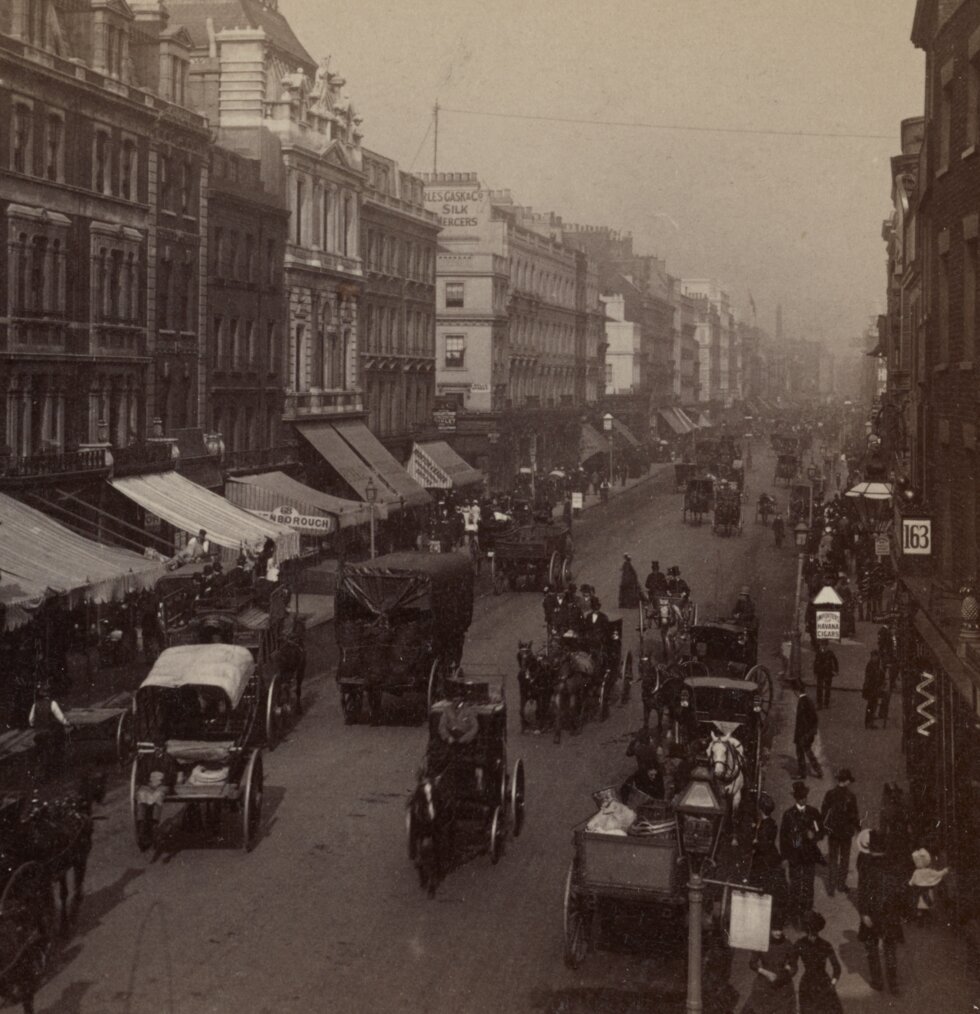
J. F. Jarvis, “‘Oxford Street, London, England’” (Photograph, London, [c.1887]), Prints and Photographs Division, STEREO FOREIGN GEOG FILE - England--London--Streets--Oxford [item] [P&P], Library of Congress, Washington, United States. No known restrictions on publication. A photograph of bustling Oxford Street in London, England, around 1887, when William Ivens was trying to decide whether to hold out in his home country, or return to his family in the US where he faced mounting racism.
By 12 August 1882, it seems that something had changed Williams Ivens’ mind about leaving England. He wrote to Chesson that he had joined the Lejeune household as a boarder due to “my being actuated by a desire to economize to a minimum, and I am now ensconced in cheaper lodgings.” Though struggling economically and suffering a flare-up of rheumatism brought about by yellow fever, he resolved to stay on in London. He was still employed, he wrote to Chesson, and was “determined to hold out where I am” (Craft 1882d).
Establishing Family and Roots
William Ivens decided to remain at the Lejeune home for reasons other than merely pecuniary ones. Just seven months after William Ivens moved in, Felix Lejeune died. One of Felix’s sons passed down the memory that Felix called his sons around his deathbed, making them swear to never become freemasons (Barnes 2024b). From his career as a bootmaker, Lejeune left an estate totaling 38 pounds and 17 shillings to Louisa and their four children (the equivalent of about £6,000 today – about $7,500).
At some point during his stay with the Lejeune family, likely shortly after Felix’s death, William Ivens developed a romantic relationship with Louisa. By the time Felix’s personal estate was administered in February of 1884, Louisa, Williams Ivens, and the children had relocated to a home at 16 Little Titchfield Street (“National Probate Calendar” 1884).
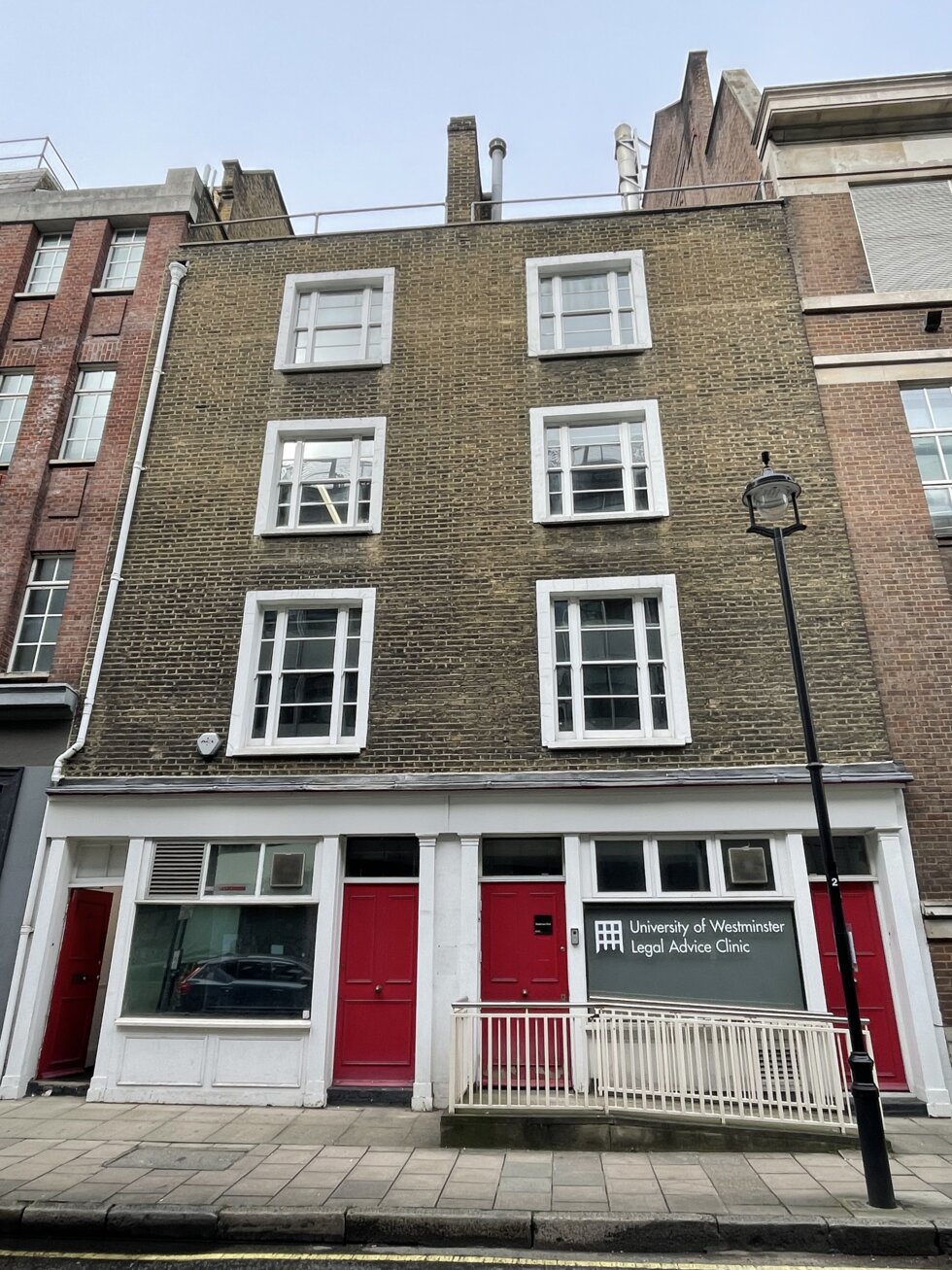
Hope McCaffrey, “Craft Home on Little Titchfield Street” (Photograph, London, 15 March 2023), Hope McCaffrey Private Collection. Creative Commons Attribution 4.0 International. William Ivens and Louisa's home on Little Titchfield street as it appeared in March 2023. Number 16’s door stands ajar.
Just over a year after Felix’s death, on 17 April 1884, William Ivens and Louisa welcomed a daughter, whom they named Ellen Louisa Craft. The family still resided at 16 Little Titchfield Street, just north of Oxford Street (Green 2018, 27). Boarding, and then starting a family, with Louisa coincided with the cessation of letters between William Ivens and various benefactors. Potentially temporarily bolstered by the small fortune Felix left them, William Ivens and Louisa tried to make a new home together for themselves and their children.
In fact, by the year of his first child’s birth, William Ivens had climbed the occupational ladder to that of commercial clerk (“Register of Birth” 1884). His brothers, Brougham and Charles Craft, continued to work as mail agents and lived together in Charleston, South Carolina (Sholes 1884). Though he may have missed his brothers and family that he left behind in the US, William Ivens was building a life and legacy for himself by putting down new roots in London.