Introduction
Despite an absence of correspondence among family members, records show that the Craft family remained a close-knit one even as the Atlantic Ocean stood between them. As William Ivens Craft neared the end of his life, he remained committed to his family on both sides of the ocean.
Transatlantic Reunions
Ellen Craft Crum had sailed from Liberia to England to witness the marriage of her niece, whom she may have never met before, and to visit her brother (Green 2018, 143; Clark 2021). Ellen – who built her life in the United States – married William Demosthenes Crum, a Howard University graduate, physician, and later minister to Liberia. Ellen, too, was a leader. She was one of the founders of the National Federation of Afro-American Women, a forerunner to the National Association of Colored Women’s Clubs (McCaskill 2015, 87; Sterling 1988, 59). At the first National Conference of Colored Women, Ellen spoke in support of anti-lynching crusader Ida B. Wells, dubbing her “our ‘Joanna of Arc’” (Sterling 1988, 96).
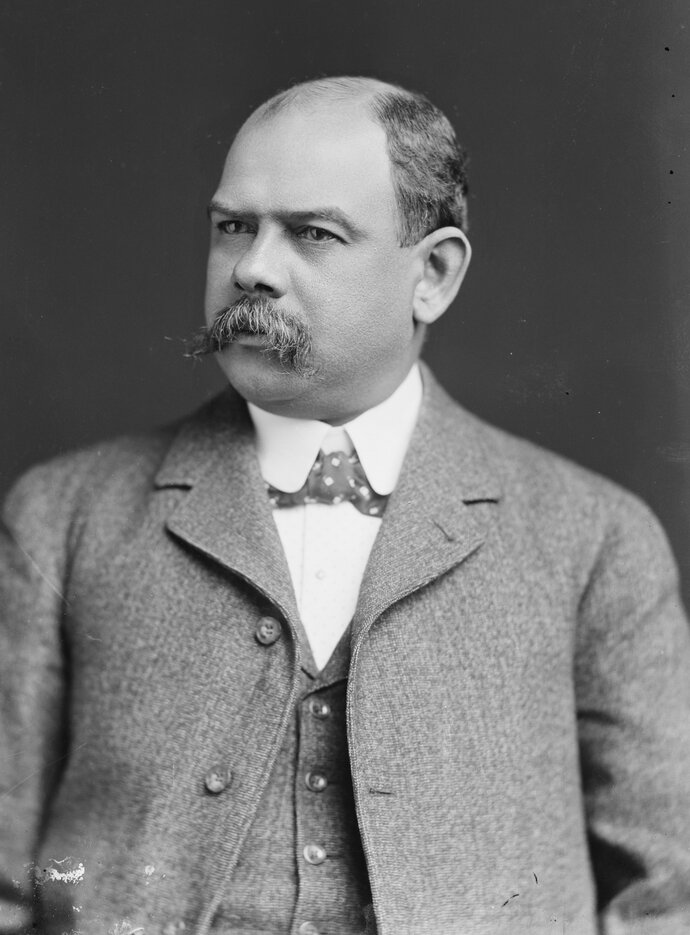
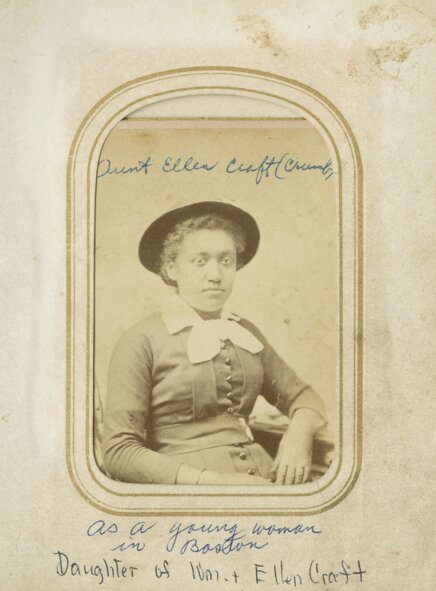
(Left) C. M. Bell, “William D. Crum” (Photograph, [c.1901-1903]), Library of Congress Prints and Photographs Division Washington, D.C. 20540 USA. LC-B5- 50018B [P&P], Library of Congress, Washington, D.C., United States. No known restrictions on publication. (Right) Anonymous, “Ellen Craft Crum” (Photograph, [c.1866-1917]), AMN 1102, Avery Research Center, Charleston, United States. Courtesy of Avery Research Center for African American History and Culture, College of Charleston Libraries. All rights reserved. This is one of 7 images published by this project, all of which exhibit the same material characteristics due to coming from a single album held by the Avery Research Center. Ellen Craft Crum (R), William Ivens’ sister and leader among African American women, and her husband, William D. Crum (L), were prominent members in Charleston’s elite, African American society. Ellen stayed in touch with, and visited, her brother in England.
William Alfred Craft, another of William Ivens’ children, also chose to start his own family in 1912. He married a woman named Elizabeth J. Christian. Yet even as the Craft diaspora grew, the family stayed connected. In the early 1920s, William Ivens’ brother Charles came to London and, in the words of Craft family desdendant Chris Clark, “[t]hey must have had plenty to talk about after all those years” (Copeland 2021; Clark 2021).
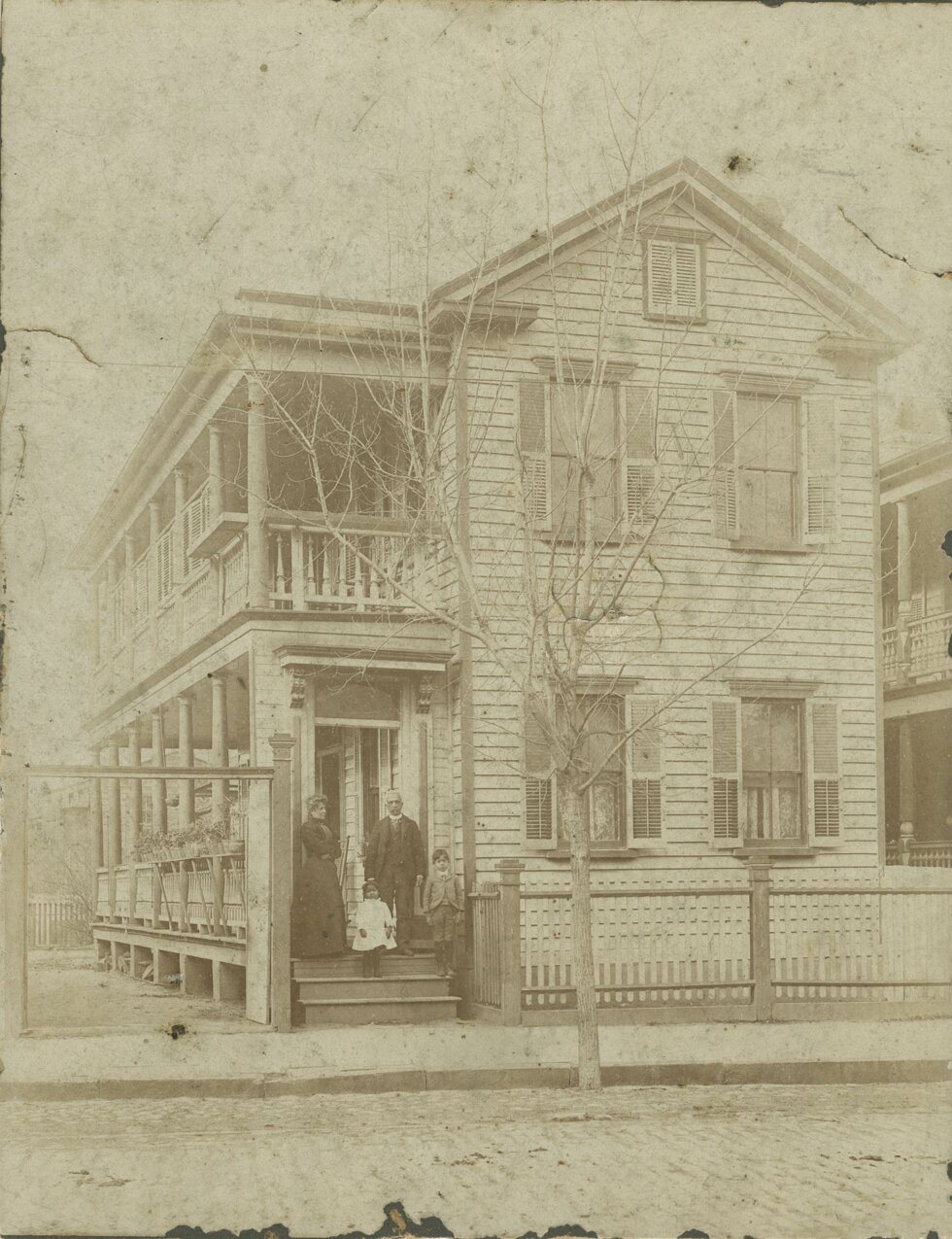
Anonymous, “Charles and Emeline Craft’s Home in Charleston, South Carolina” (Photograph, [c.1900]), AMN 1102, Avery Research Center, Charleston, United States. Courtesy of Avery Research Center for African American History and Culture, College of Charleston Libraries. All rights reserved. Charles Estlin Philips Craft (William Ivens’ eldest sibling), his wife, Emeline Craft, and their two children stood for this photograph on the steps of their Charleston, South Carolina, home. Although an ocean apart, William Ivens and his daughter, Nellie, kept in touch with Uncle Charles and his family.
William Ivens continued as “the head of the family” in England. As Martin and Eileen Copeland describe, “it seems that William Ivens was always part of a big group of family [...]. It must have been a very close family unit, in those days – as families were” (Copeland and Copeland 2022). And the London Crafts continued to welcome new generations. In 1921, William Ivens lived with two of his grandchildren as well as Claude and Nellie Clark on the east side of Vicarage Farm Road in Hounslow. Claude was a fancy leather goods manufacturer who worked out of their home, while Nellie was recorded as performing “home duties.” William Ivens, then 65, had most recently worked as a builders’ clerk for Holland, Hannen & Cubitts in Chiswick (“1921 England Census”; Copeland 2021).
William Ivens prioritized keeping in touch with his family across the Atlantic. A letter from his nephew, Charles (son of Brougham), reveals as much. “I have often wondered about you since my return from the army and our most cordial & quite persistant [sic] correspondence have ceased[,] let’s renew it at least for awhile [sic],” suggested Charles at the end of March 1926. Charles signed the letter familiarly as “Charlie” and wrote from central Harlem, New York City, where he lived – just two blocks from the Apollo Theater (Craft 1926).
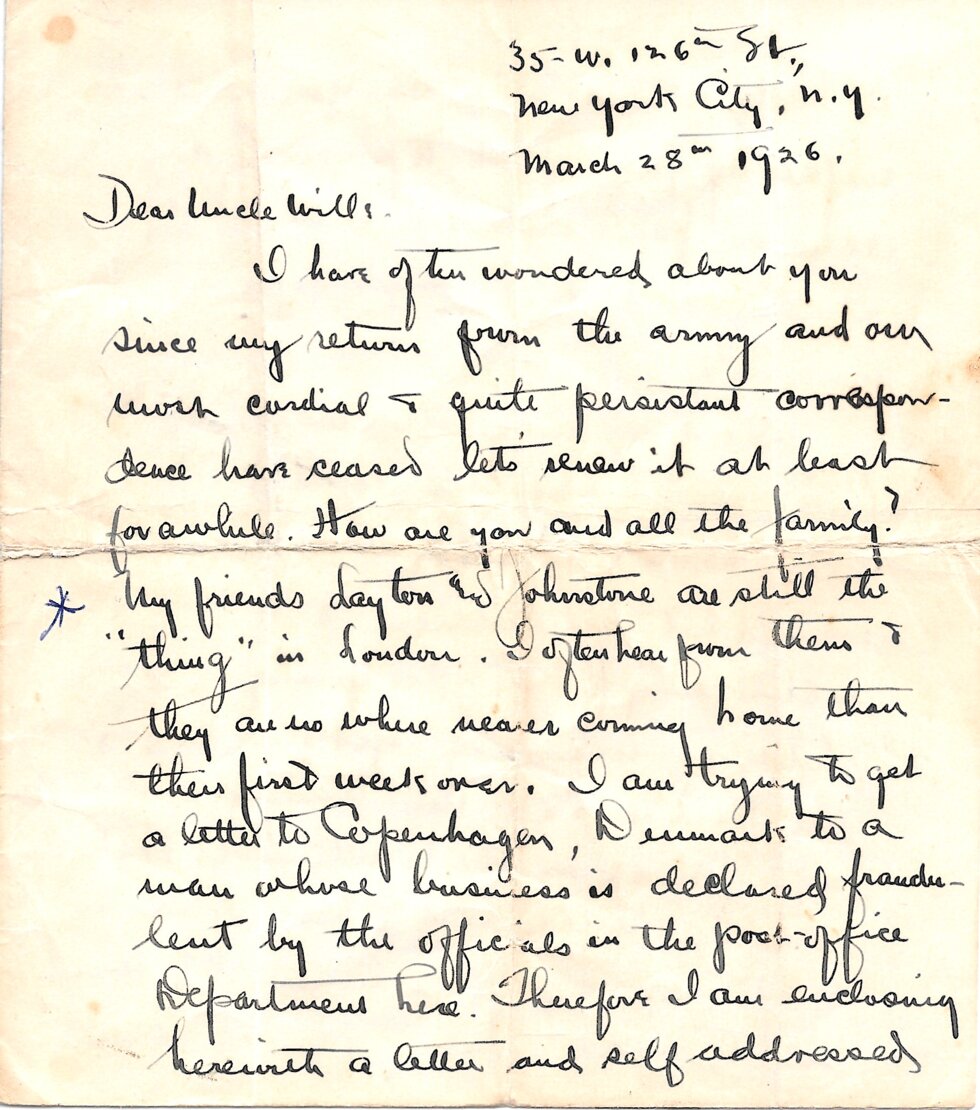
Charles Craft, “Letter from Charlie Craft to William Ivens Craft” (Manuscript, 28 March 1926), Martin Copeland Private Collection. Creative Commons Attribution 4.0 International. This 1926 letter from Charles Craft, Brougham Craft’s son, to his uncle, William Ivens Craft, discloses that the two had a relationship despite being an ocean apart. William Ivens valued maintaining and growing family connections across the Atlantic.
The uncle and nephew had a warm rapport, indicating intimacy achieved between far-flung family members. “I sincerely trust this letter finds you in very good health although [sic] when a body attains the age you have it[’]s unfair if you expect to prevent an ache of pain now and then,” poked Charles. “Keep smiling and don’t forget to write me soon,” he closed (Craft 1926).
At Home in Hounslow
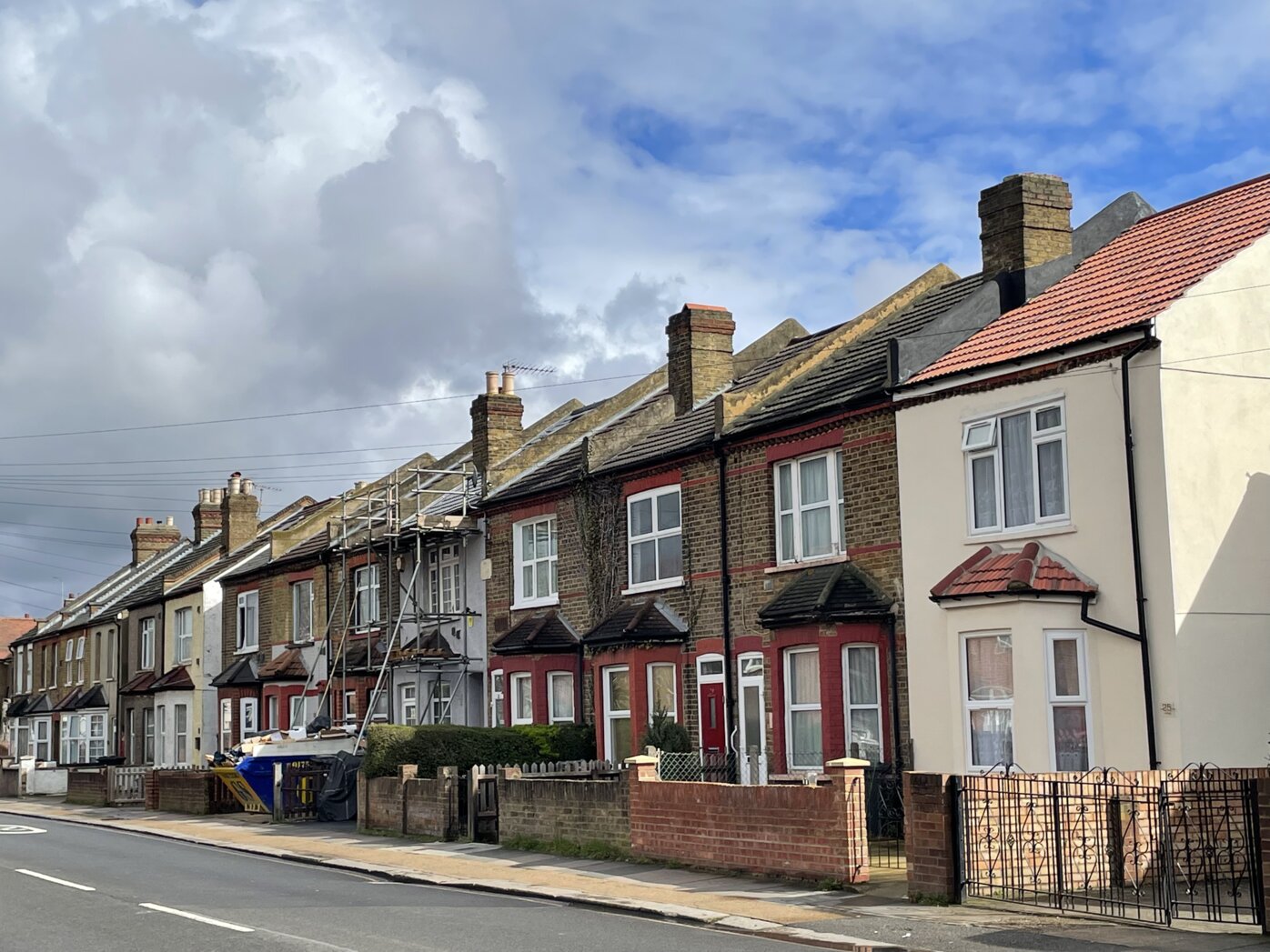
It was in the small house on a quiet street in Hounslow that William Ivens Craft passed in his sleep in 1926, at the age of 70, living with his multi-generational family (Green 2018, 138; Clark 2021). Without savings to afford a burial, William Ivens was laid to rest in an unmarked grave on Sutton Lane in Hounslow (Copeland 2021). “William Ivens, when he died,” remembered William Ivens’ great-grandson, Martin Copeland, was buried in a “pauper's grave. My mum took me there not long before she died [...]. She knew where it was, but there was nothing there. Sad, because they had no money. They had no money to bury him” (Copeland and Copeland 2022).
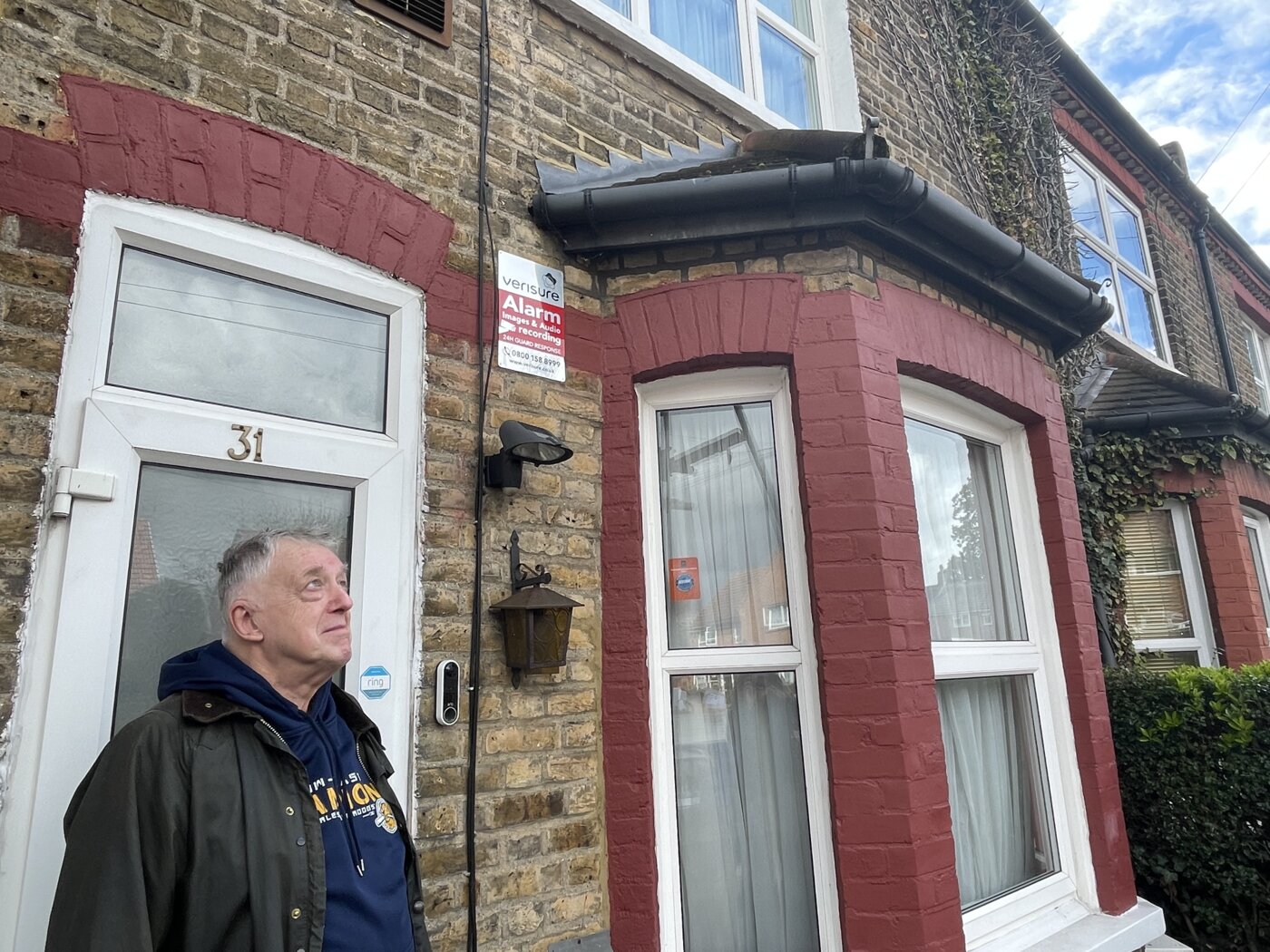
Hope McCaffrey, “Chris Clark at Vicarage Farm Road” (Photograph, London, March 18, 2023), Hope McCaffrey Private Collection. Creative Commons Attribution 4.0 International. Chris Clark, a great-grandson of William Ivens Craft, stands proudly outside William Ivens’ last place of residence, 31 Vicarage Farm Road in Hounslow, in March of 2023.
That money was scarce at the close of his life represents the cycles of struggle, success, and loss in the life of an educated man of Black-descent in Victorian England. “Even if they did not fulfill their dreams,” notes scholar Barbara McCaskill, “the Crafts,” including William Ivens, “kept trying” (McCaskill 2015, 89). Rather than a linear story of progress, William Ivens Craft’s life is better understood through its cycles of determination and setbacks, and the enduring constancy of family.