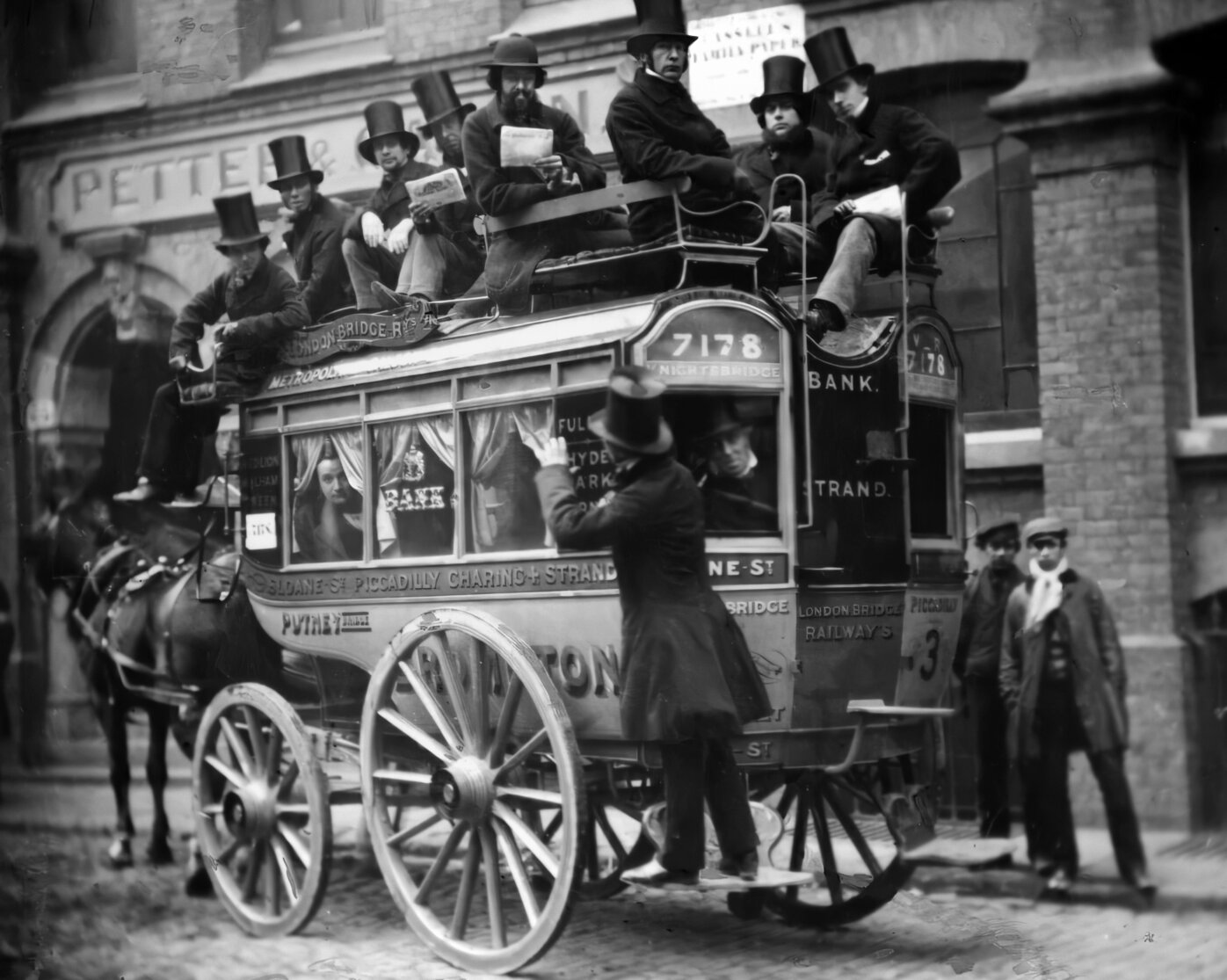
Introduction
It is clear that William Ivens Craft labored in a rigid class system that curtailed his chances for economic mobility. What is more complicated to untangle is how racism and British anti-Blackness stymied his opportunities. Racism and racial categories looked different in William Ivens’ home country than they did in the United States. Whether thwarted by racism or classism, or a combination of both, however, William Ivens was determined to make London home again.
Race and Racism in William Ivens’ London
In December 1881, William Ivens struggled to make ends meet. He had pawned his overcoat, lived “very economically,” he reported, and held out hope for an increase in salary at the start of the New Year (Craft 1881a). Although he had left the United States to escape what he termed “the spirit engendered by slavery,” William Ivens found himself fettered by lines of class in England. His struggle to find adequate and “decent” clothing was one example of how poverty circumscribed his economic advancement, although he understood the importance of appearance when it came to respectability (Craft 1881b; 1881f).
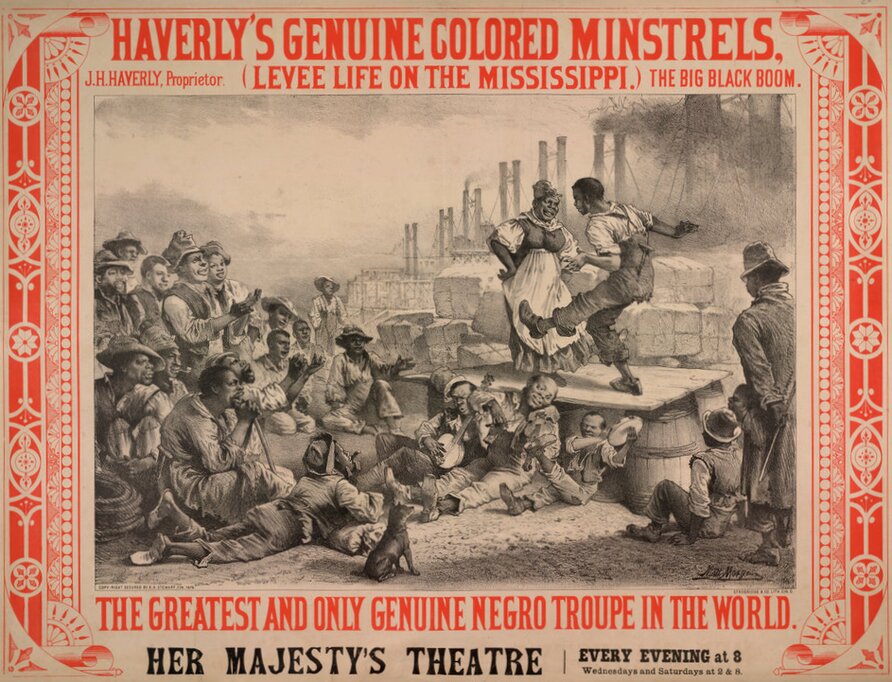
Matt Morgan, “Poster for J. H. Haverly’s Genuine Colored Minstrels, Levee Life on the Mississippi, Performing at Her Majesty’s Theater” (Illustration, Westminster, London, [1878]), Wikimedia Commons. Public domain. Advertisement for Haverly’s Minstrels at Her Majesty’s Theatre in London, in 1878. The anti-Blackness perpetuated by minstrelsy, as well as the forms of whiteness it constructed, were transatlantic projects. William Ivens noticed that the group had a successful run in London, appealing to the white crowds, and noted in a letter to Elizabeth Pease Nichol that the group was headed to Scotland next.

What is less clear is the extent to which racism pervaded his life in London. In some ways, William Ivens was unable to escape the reach of transatlantic anti-Blackness. He wrote to Nichol that the American minstrel troupe, the Haverly Minstrels, “had quite a successful time” in London and were headed to Scotland next (Craft 1881a). Such minstrelsy, with its claims to accurate portrayal of Black Americans, helped produce and perpetuate racist stereotypes of Black people as well as cross-class and even transatlantic white racial solidarity. Though he had traveled to England to escape American racism, the ocean could not interrupt the flow and cross currents of white supremacy.
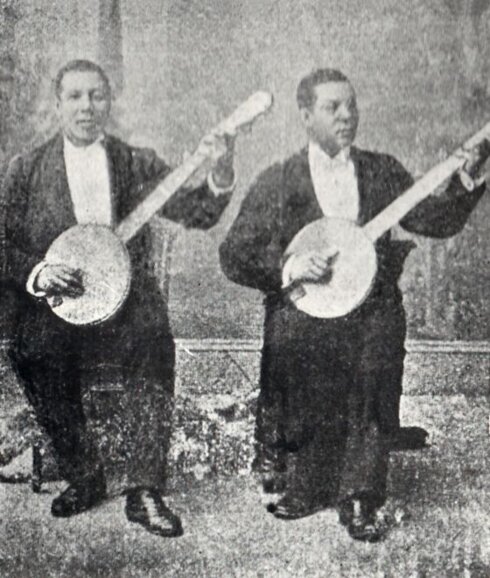
Anonymous, “The Bohee Brothers,” in Minstrel Memories: The Story of Burnt Cork Minstrelsy in Great Britain from 1836 to 1927, by Harry Reynolds (London: A. Rivers, 1928), 196, Wikimedia Commons. Public domain. The Bohee Brothers were Canadian-born, Caribbean-descended musicians who toured the US and Great Britain to great acclaim in the late nineteenth century. Despite the stereotypes and racist tropes that minstrelsy hinged on, in England the Bohee brothers found greater freedom and success than they did in the US, helping to explain why they stayed in Europe until their deaths (Green 2014b).

William Ivens’ encounter with minstrelsy in the second half of the nineteenth century was not an unusual experience for Londoners. Historian Jeffrey Green (2018, 51) explains the success of minstrelsy to its appeal as “a family show, with choral and solo singing, instrumental selections, humour, topicality, sentimentality and joy.” Nonetheless, Green points out, the “legacy was almost toxic, for audiences associated African Americans with music, dance and humour” (2018, 51). In fact, William Ivens’ return coincided with what scholar Laura Vorachek (2013) has termed the “apogee” of blackface minstrelsy’s popularity in England.
A New Generation of Black Britons
As the British-born son of formerly enslaved people, William Ivens Craft represented a new generation of Black Englishmen. Black men and women who had fled slavery earlier in the nineteenth century “moved in every level of [English] society and were friends with influential people,” writes Jeffrey Green (2018, 23). They were also “lionized,” notes R. J. M. Blackett (1983, 40). Yet, William Ivens found the doors that had opened for his parents’ generation closed to him. Without the status of fugitive from slavery, he did not represent to white English people what Blackett terms “resistance to oppression” (1983, 201).
Developments in Britain’s global empire also shaded how white former abolitionists approached the post-Civil War world of philanthropy and Black rights. For instance, after the Jamaica revolt of 1865, some white abolitionists began using the language of Black racial inferiority, insisting that formerly enslaved people were unfit to govern or care for themselves. By the 1880s, the British Empire was winding its way through the continent of Africa while white Britons were cementing such racial attitudes (Bolt 1971, 89, 109). Historians conclude that as the nineteenth century progressed, the situation for Black people in the British Empire worsened (Sherwood 2011, 53; Lorimer 1978, 203).
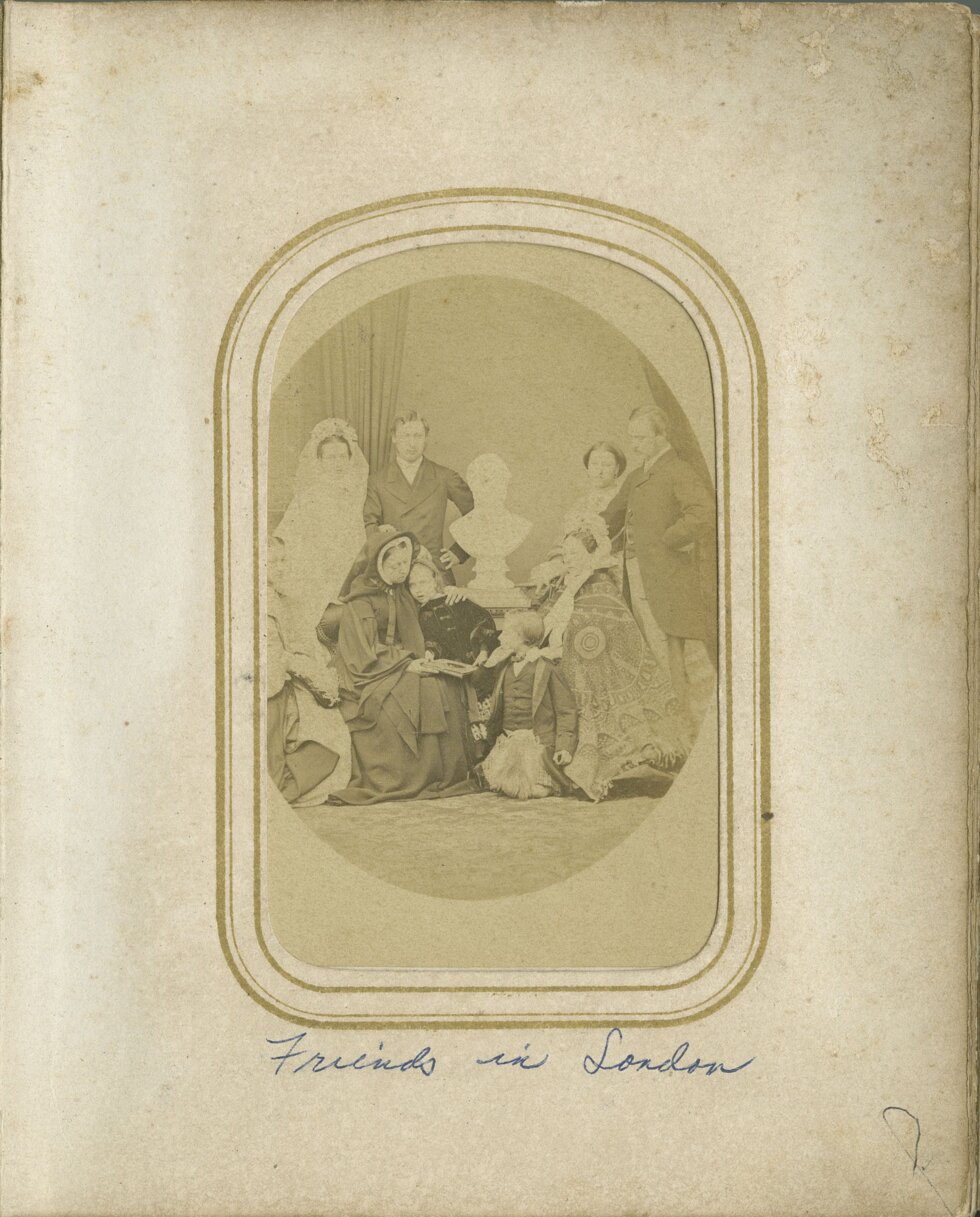
Anonymous, “The Crafts' Friends in London” (Photograph, [c.1850-1900]), AMN 1102, Avery Research Center, Charleston, United States. Courtesy of Avery Research Center for African American History and Culture, College of Charleston Libraries. All rights reserved. This is one of 7 images published by this project, all of which exhibit the same material characteristics due to coming from a single album held by the Avery Research Center. This photograph, placed in the Craft album by a member of the family, shows a group of adults with the simple caption, "Friends in London." While William and Ellen Craft may have found and benefited from a thriving community of white abolitionists in England, William Ivens found that such a network had dissolved by the time he hoped to similarly activate white abolitionists' outrage at racial injustice.
Thus, William Ivens was an impoverished Black Briton in an expanding empire. The color line that Great Britain pushed further and further across the globe preferred to make William Ivens’ – and his Blackness – disappear (Lake and Reynolds 2008). Because race was not marked in the census or other bureaucratic papers, William Ivens and other Black Victorian English men and women were literally erased from the nation’s memory (Killingray 2003, 54; Green 2003, 39).
Understanding William Ivens Craft’s life within the context of other Black men seeking freer, more prosperous lives beyond the reach of American racism lays bare Victorian Britain’s white supremacist landscape. Exiled African American professor William G. Allen, for example, at first noted “the entire absence of prejudice against color” among Englishmen when he first arrived in the 1850s (1853). Yet, as historian Richard J. M. Blackett (1980, 47) writes, Allen “never won popular acclaim of support from the British public,” and he and his growing family “were always close to poverty and many times almost destitute” – despite the aid of philanthropes such as Lady Byron.
The Allens later experienced British racism when white teachers conspired to force Allen to close the school he had opened for 150 pupils in Islington (Murray 2024, 324; Blackett 1980, 48, 51). Many of Allen’s extent letters strike an alarmingly similar tone to William Ivens’, as he even wrote to many of the same correspondents, including Louis Chamerozov and Frederick Chesson. A man with Allen’s education and experience, notes historian Marika Sherwood, “should not have found it difficult to earn a living. That he did, […] demonstrates the superficiality of English politeness to people with a darker skin” (Sherwood 2011, 53, 62-63).
Yet whatever economic hardship William Ivens faced in England, it must have seemed better than the situation in America. Throughout 1882, William Ivens’ family encouraged him to stay in the “old Country.” Ellen and William “tried to pursuade [sic] him to remain a short time longer” in London, “it being so very much easier for a man of color to succeed” (Craft 1882). William Ivens’ brother also recommended that he remain in England (Craft 1882b).
The ‘Edge of Despair’
While his family believed that London could not possibly be worse than the situation in the southern U.S., William Ivens continued to face near destitution. He wrote to Nichol that, “if it had not been for your generosity I might now have been languishing in the Workhouse or some prison. Dear Friend,” he continued, “you cannot know nor imagine that flow of gratitude that fills my heart when I think of your goodness” (Craft 1882a).
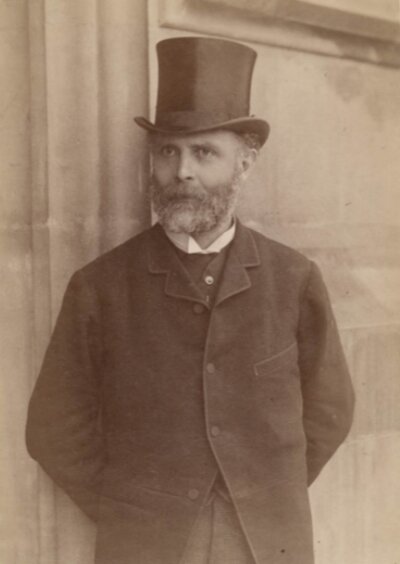
Anonymous, “‘Frederick William Chesson’” (Photograph, [c.1833-1888]), Massachusetts Historical Society, Boston, United States. Collection of the Massachusetts Historical Society. Public domain. Frederick William Chesson was an ardent abolitionist in the 1850s but, by the second half of the nineteenth century, had turned his attention to the London Aborigines' Protection Society. Upon his arrival back in England, William Ivens turned to people like Chesson and Fowler, who had helped his family in the past. With emancipation, however, William Ivens found that men like Chesson and Fowler felt that their work regarding slavery and racial justice in the US was complete.
Despite the setbacks, William Ivens persisted in his hometown of London. He continued to work for the Railways & Metropolitan Omnibus Company Limited. He confided to Chesson in May of 1882 that if he did not procure five pounds by Saturday, he “may get into trouble” (Craft 1882c). He also wrote of his precarious position to Nichol, informing her that he teetered “on the ‘ragged edge of despair’” (Craft 1882a).
It would appear that William Ivens, at an impasse bounded by class barriers and transatlantic anti-Blackness, considered and perhaps planned a return to his family and the increasingly unfree American South. He told Nichol that he would soon leave England and promised he would no longer bother her. “I am going back to America in the Autumn for sure,” William Ivens wrote on 3 May 1882. “If you accede to what I asked you for £3 I shall be all right” (Craft 1882a). We have no proof that Nichol ever sent him the three pounds.