Introduction
William Ivens Craft may or may not have joined his family in their efforts at starting a revolutionary co-operative school, as we find only traces of his life throughout the turbulent years he spent in the former slave states. By the start of the 1880s, William Ivens decided to set out on his own, as his parents and siblings faced a new set of challenges from white Southerners and their former co-abolitionists alike.
The Craft Brothers as Route Agents
The lack of a paper trail makes it difficult to determine whether William Ivens ever joined his family at their home in Georgia. However, one piece of evidence hints that he spent some time in Savannah in 1876. In a letter written later in his life, William Ivens mentions that he was “suffering from my old complaint, rheumatism, superinduced by an attack of Yellow Fever I contracted in 1876 in America” (Craft 1882d). It is likely that William Ivens caught the disease when it erupted viciously in Savannah in August of 1876, killing upwards of one thousand people, infecting thousands more, and forcing even more to flee the city (Georgia Historical Society n.d.).
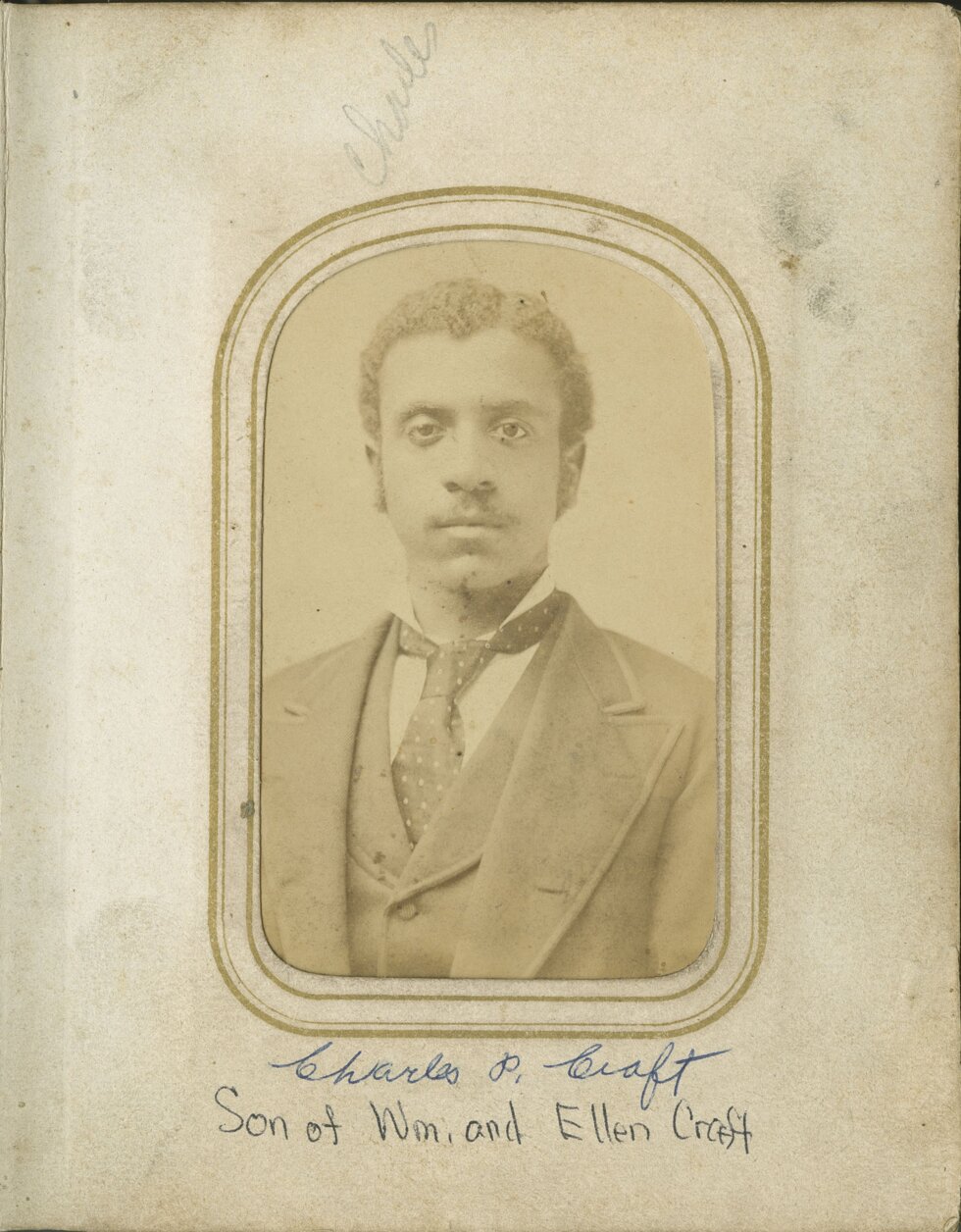
Anonymous, “Charles P. Craft Portrait” (Photograph, [c.1860-1938]), AMN 1102, Avery Research Center, Charleston, United States. Courtesy of Avery Research Center for African American History and Culture, College of Charleston Libraries. All rights reserved. This is one of 7 images published by this project, all of which exhibit the same material characteristics due to coming from a single album held by the Avery Research Center. This photo of Charles Estlin Philips Craft, William Ivens’ eldest brother and the firstborn of the Craft children, as a young man likely depicts him as he looked when he worked with his brothers for the Post Office Rail Service.
By 1877, the recovering William Ivens had made his way to Florida, where he was reunited with his brother, Charles. The Post Office Railway Mail Service employed William Ivens and Charles in 1877, 1878, and 1879, and they worked as Route Agents between Savannah, Georgia, and Live Oak, Florida, and then later between Savannah and Jacksonville. The brothers made a salary between $900 and $1,000 each year (approximately $26,000 to $29,000 in 2024) (US Department of the Interior 1877, 422; 1879, 33).
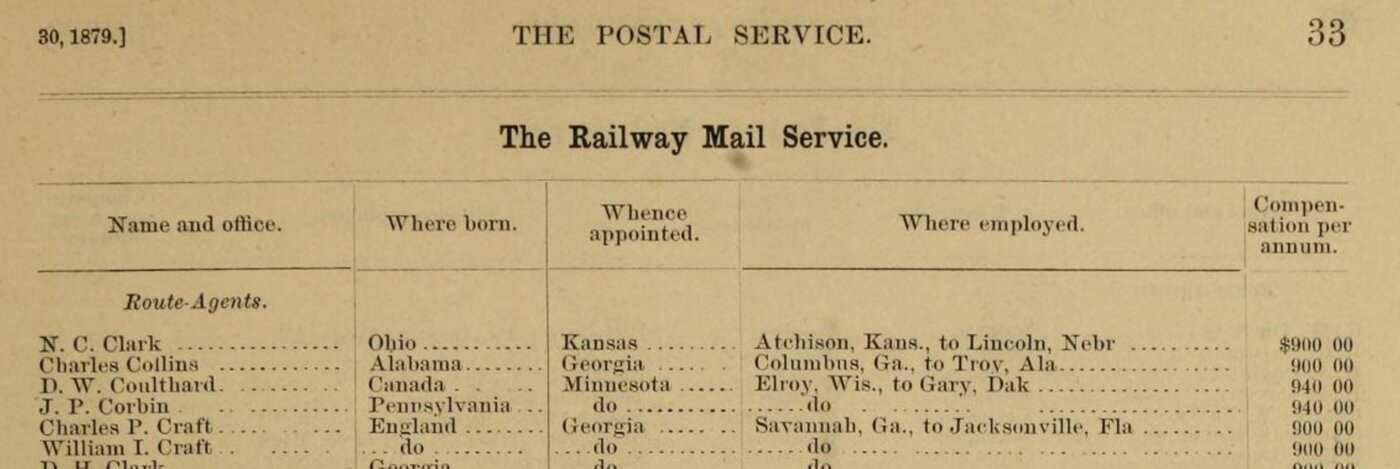
US Post Office Department, “William Ivens Craft Railway Agent,” in Official Register of the Officers and Employés in the Civil, Military, and Naval Service on the Thirtieth of June, 1879 (Washington, D.C.: Government Printing Office, 1879), 33, Internet Archive. No known copyright or restrictions. Though documents and books published by the federal government may seem dry, these records offer critical insights that help researchers reconstruct the lives of people such as William Ivens Craft and his brothers.
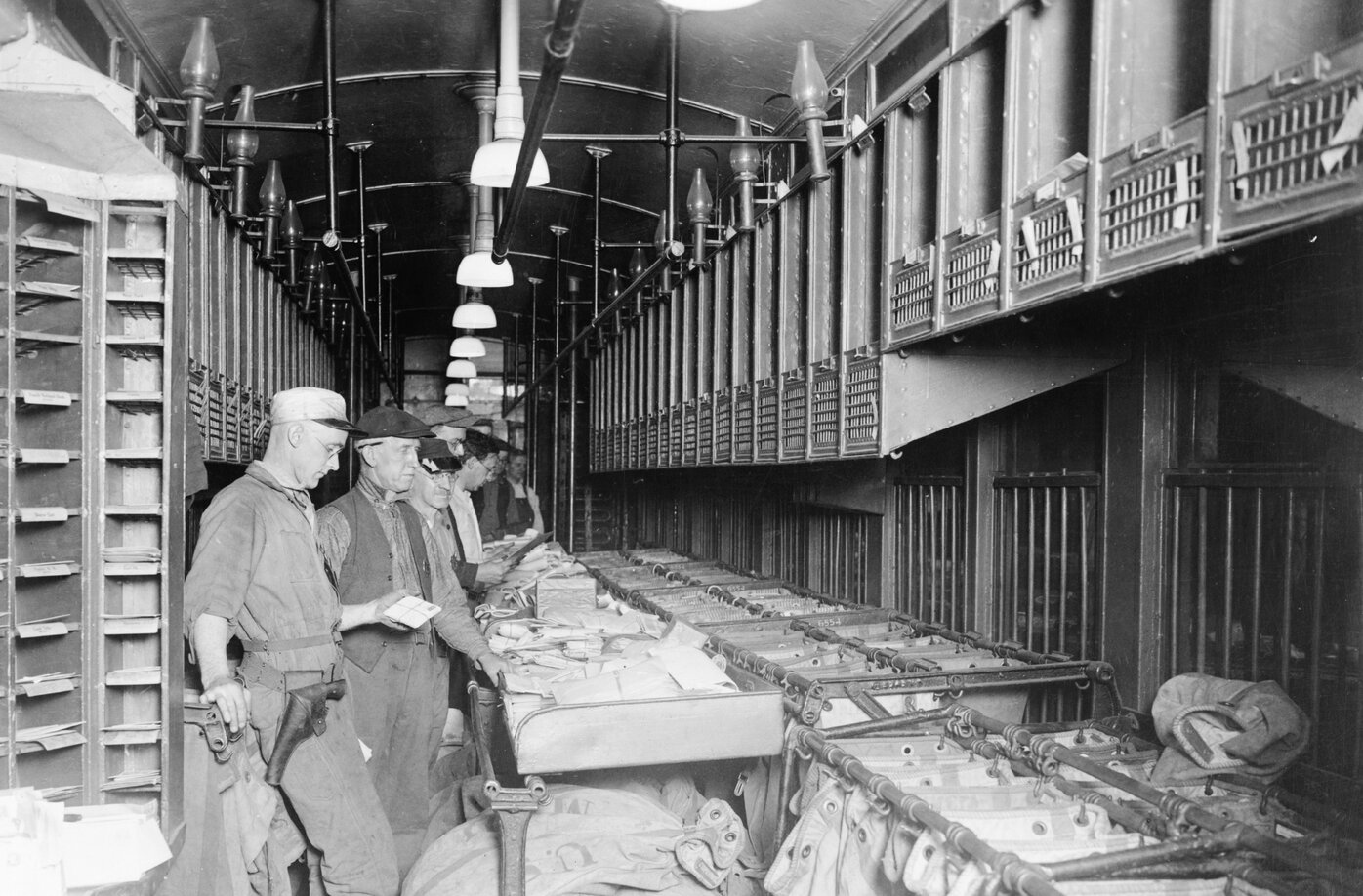
Working for the Post Office railways required both skill and nerve. William Ivens and his brother were expected to sort mail on the moving trains and found themselves at risk of train robberies as well as dangerous accidents. William Ivens and Charles continued in their federal positions until at least 1880. That year, they lived at the same address on the corner of Broughton and Lincoln Streets in Savannah. Interestingly, Charles’ name was followed by a “c,” marking his race, while no similar marker of race accompanied William Ivens’ name (Sholes & Co. 1880, 162). This bureaucratic inconsistency points to the fluid and constructed nature of race in the United States – despite its very real material consequences.
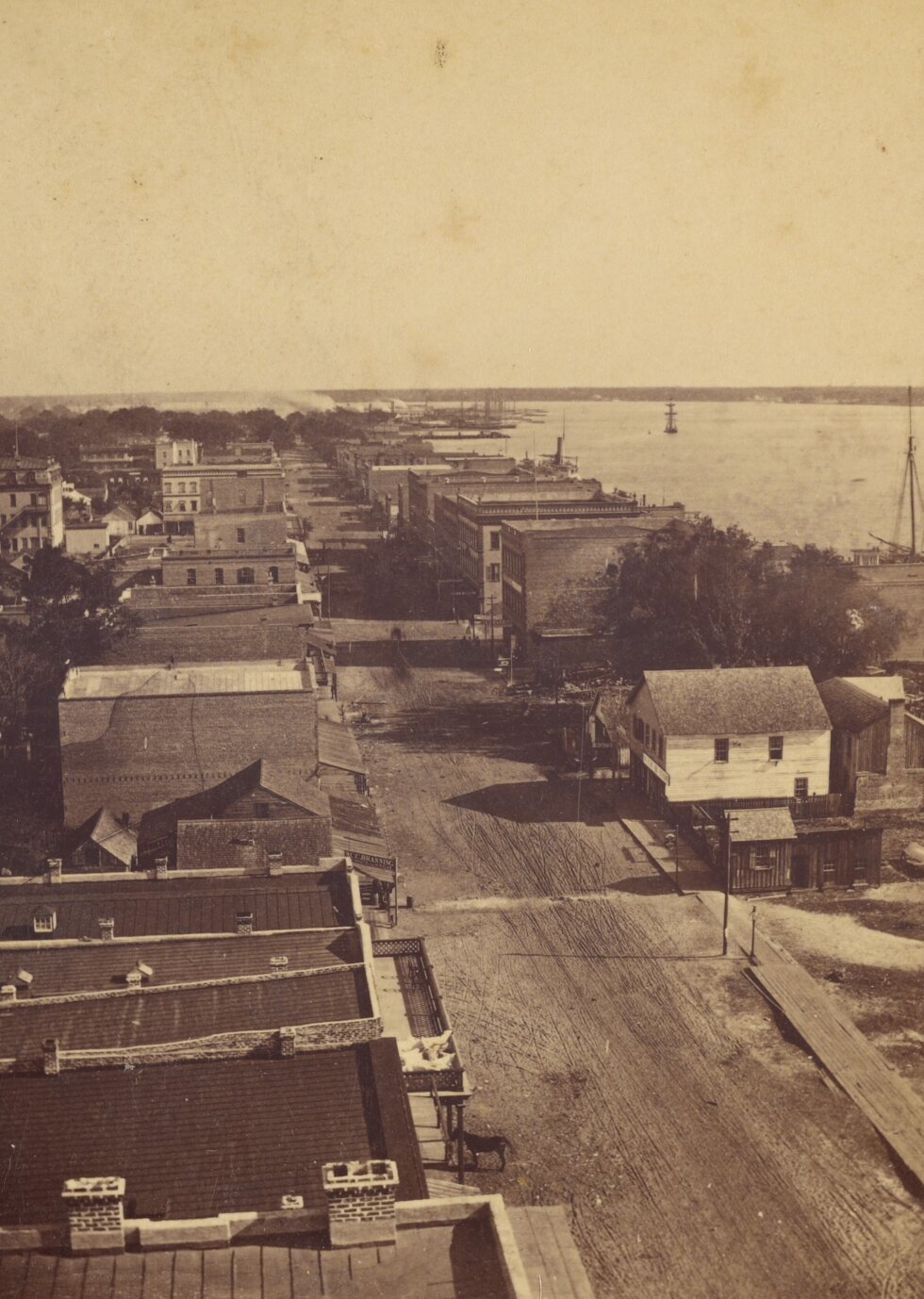
Robert N. Dennis, “'Bay Street,'' Jacksonville, Fla.” (Photograph, Jacksonville, FL, [1875]), The Miriam and Ira D. Wallach Division of Art, Prints and Photographs: Photography Collection, New York Public Library, New York City, United States. Public domain. A view of Bay Street, Jacksonville, Florida, around 1870 – 1880, where William Ivens Craft was enumerated in the 1880 census. This stretch of Bay Street may have been familiar to William Ivens and his brother, Charles, during their stay at Baxter’s.
Working the line from Georgia to Florida, the brothers built community in the Sunshine State. For at least part of 1880 they became regulars in Jacksonville, staying at Thomas Baxter’s boarding house. Among the other boarders at Baxter’s were three Cuban-born men who worked at a nearby cigar factory (“1880 US Federal Census” 1880). Baxter, whom the US census denoted as mixed-race, was born in North Carolina around 1850. He worked as a merchant, ran his boarding house at 167 Bay Street, and he also helped organize the Athletic Base Ball Club. Baxter started the club in the late 1870s and by 1886 it had joined the League of Southern Colored Base Ballists (Brunson 2019, 50).
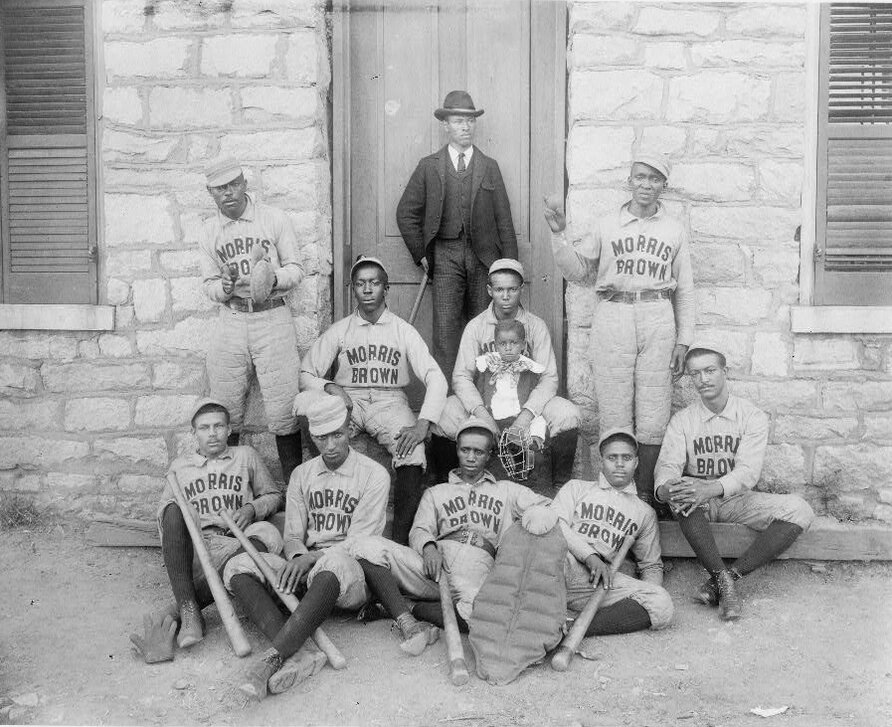
Anonymous, “African American Baseball Players from Morris Brown College, with Boy and Another Man Standing at Door, Atlanta, Georgia” (Photograph, [c.1899-1900]), Du Bois, W. E. B. (William Edward Burghardt), 1868-1963. Du Bois albums of photographs of African Americans in Georgia exhibited at the Paris Exposition Universelle in 1900. LOT 11930, no. 337, Library of Congress, Washington, United States. No known restrictions on publication. During his stints in Jacksonville while working for the railroad, William Ivens stayed with baseballer Thomas Baxter. It is unclear whether William Ivens glimpsed the world of the famous Negro League, but it seems likely he at least heard about it while staying with one of the team organizers. One wonders what this young man from London thought of baseball – might he have ever played catch with Baxter?
Although William Ivens became chummy with baseballers and seems to have had a stable income, he nonetheless decided to return to his home – London. What immediately prompted William Ivens to leave both America and his family to return to England remains one of the biggest questions of this story.
William Ivens Looks Towards Home
It is not difficult to imagine, however, that William Ivens Craft was deeply jarred by the racism and difficulties his politically and economically prominent family faced. The Crafts were not merely trying to get by in the war-torn South. Rather, they aimed to uplift those around them and dared to dream a future of freedom, autonomy, and education for Black Americans – while white supremacists violently attempted to reclaim the American South. As William Ivens later expressed in a letter, “there is still an undercurrent of feeling pervading throughout the U.S. against a ‘man of colour’” (Craft 1881b).
Despite – or perhaps because of – the Craft family’s political visibility and hard work among rural African American communities in Georgia, the Crafts became targets of scrutiny. In 1876, a Boston newspaper, which claimed to have Bostonian and Georgian informants (McCaskill 2015, 80), alleged that instead of investing the funds he had raised into the school, William Craft lived “on the money he collects” (Anonymous 1876a). The article, eliciting a response, asked “Where is his school? Who attends it? [...] Come now, Crafts, and tell us all about it” (Anonymous 1876a). William responded by bringing a libel suit against the Boston firm Naylor and Co., which proved unsuccessful (McCaskill 2015, 80-82).
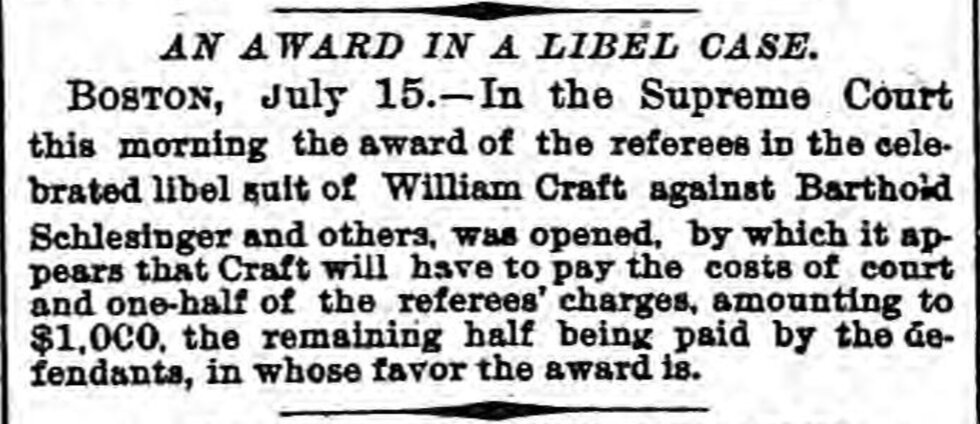
Anonymous, “An Award in Libel Case,” New York Times 27, no. 8375 (July 16, 1878): 1. No known restrictions on publication. The Crafts’ libel suit received great attention from the media. Although they ultimately lost the case as well as status in the eyes of their white former collaborators, much of what we now know about the co-operative school comes from these court proceedings and testimonies, which newspaper editors printed daily.
During the trial, scholar Barbara McCaskill (2015, 84) points out, “the Crafts’ former sponsors […] helped derail William and Ellen’s southern scheme and muddy William’s character.” These former abolitionists smeared William Ivens’ character as well. It was during the trials – which drew much public attention – that Wendell Phillips recounted his alleged run-in with William Ivens in D.C. William Ivens did not appear as a witness and was thus unable to defend himself from such slander. Forced to pay court costs and half of the referees’ charges, which amounted to $1,000 in 1878 (some $30,000 in 2023), the expense of the lawsuit forced the Crafts to close Woodville school around 1880 (Fradin and Fradin 2006, 92).